Aonpos الكل في مكان واحد
  • Advantages of modular customization of self-service kiosks
    Advantages of modular customization of self-service kiosks Dec 19, 2024
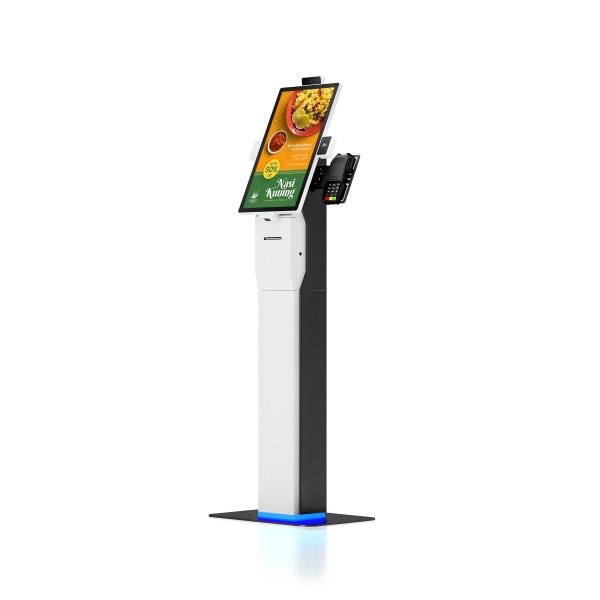
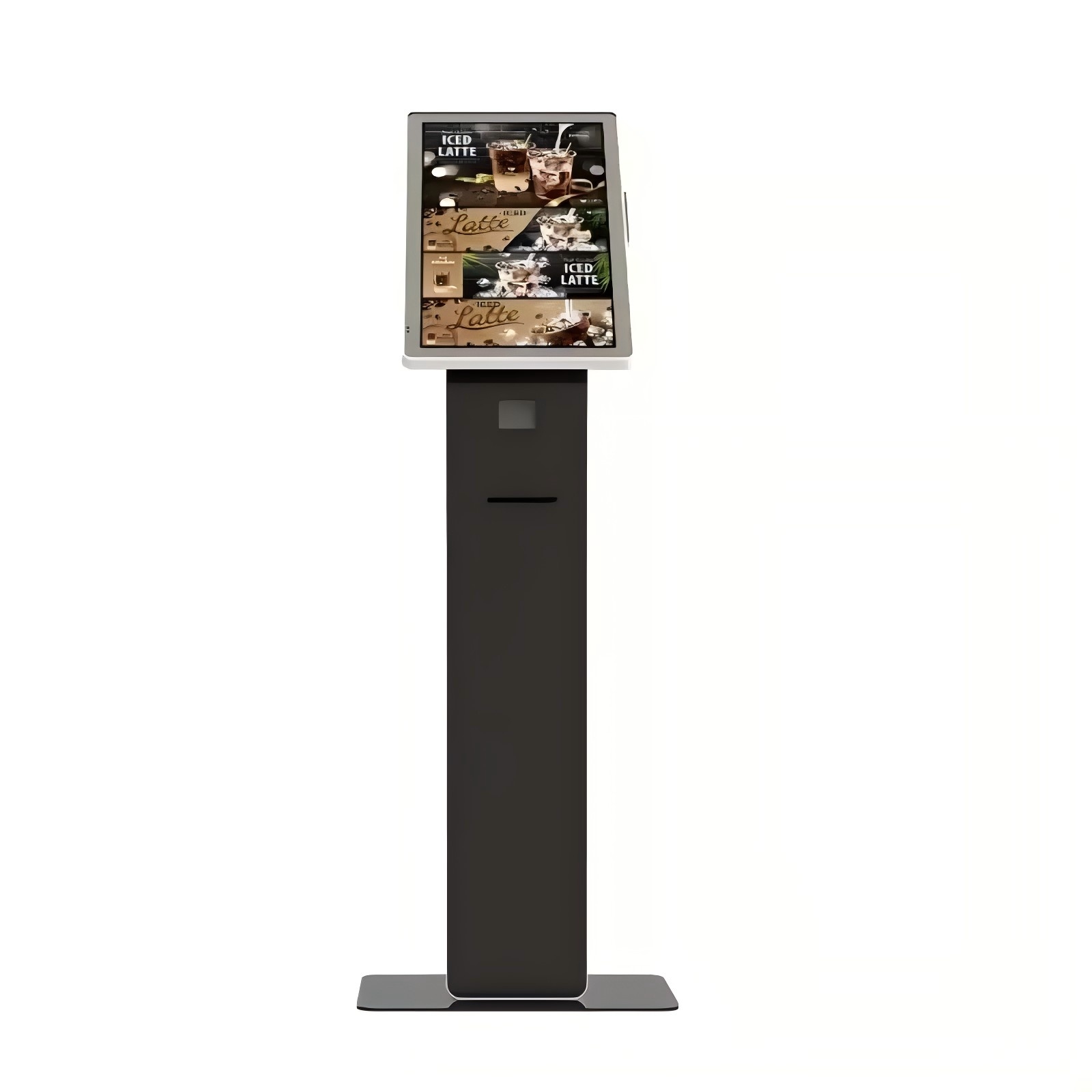
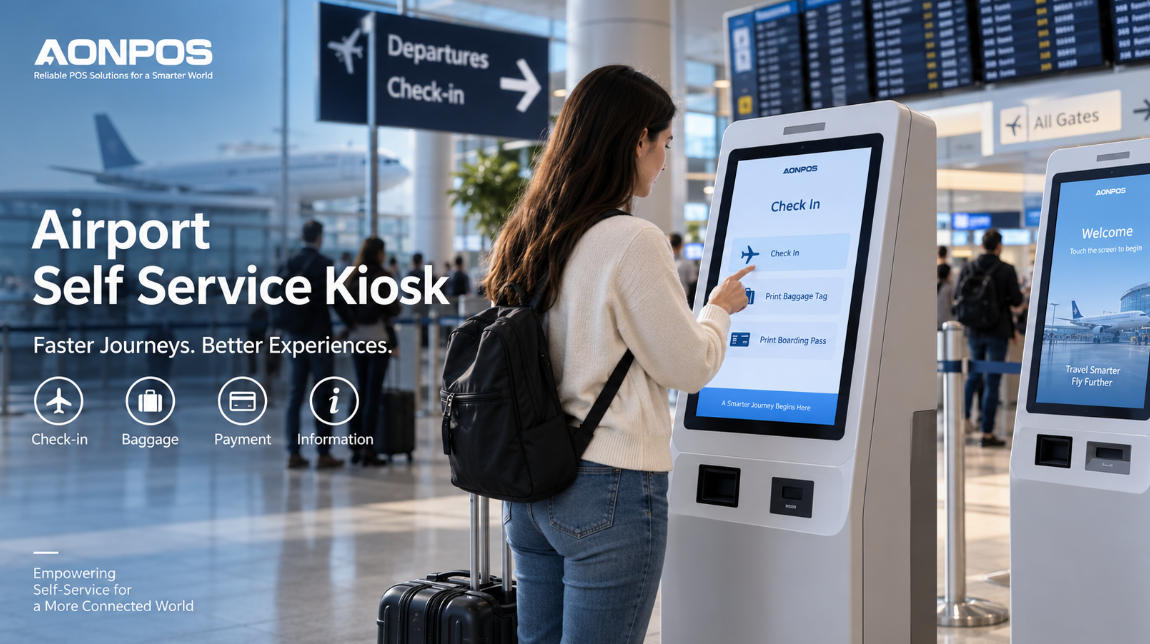
    In an era of rapidly evolving consumer expectations, businesses must adopt flexible and innovative solutions to remain competitive. Modular customization of self-service kiosks is becoming a transformative approach that provides unparalleled adaptability and efficiency to a wide range of industries. This article explores the advantages of modular customization and how it can revolutionize operations, improve customer satisfaction, and drive business growth. What is modular customization? Modular customization refers to the ability to design self-service kiosks using interchangeable modules or components. It is convenient to increase or decrease the use units at any time in response to different application scenarios, so that they can be replaced independently without the help of manufacturers, which is more efficient and direct. - Customize functions to meet specific operational needs. - Upgrade or replace parts without interrupting the entire system. - Efficient expansion to adapt to changes in demand or technology. Examples of modular functions include payment terminals, touch screen sizes, printers, cameras, status lights, making self-service kiosks highly versatile in various industries. 1. Flexibility to meet unique business needs Every business has unique requirements, and a one-size-fits-all approach often fails to meet the needs. Modular kiosks enable businesses to: - Customize features such as payment methods (credit card, NFC, QR code,Camera,). - Integrate branding with tailored interface design and physical aesthetics. - Adapt to industry-specific needs, such as adding a ticketing module for transportation or a barcode scanner for retail. Example: A fast food chain can deploy kiosks with modular components for ordering, payment, and loyalty program integration, ensuring a seamless customer experience. 2. Cost-effective upgrades and maintenance Traditional kiosks often require replacing the entire system for upgrades or repairs, resulting in high costs and downtime. Modular customization addresses this challenge by: - Allowing individual components to be upgraded or replaced independently. - Reducing maintenance costs with easily replaceable modules. - Ensuring minimal disruption to operations. Example: A retailer can upgrade only the payment module to support new payment technologies without replacing the entire kiosk. --- 3. Enhanced scalability to meet the needs of growing businesses As businesses grow, their needs change. Modular kiosks offer scalability by: - Add new features as needed. - Expand deployments across multiple locations with tailored configurations. - Quickly adapt to seasonal demands or changing customer preferences. Example: During peak shopping seasons, retailers can add more kiosks or equip existing kiosks with faster processors to handle increased traffic. --- 4. Improve sustainability and lifespan Sustainability is becoming an important consideration for modern businesses. Modular kiosks promote sustainability by: - Extending product lifecycles, as individual components can be replaced or upgraded. - Reducing e-waste by avoiding full system replacements. - Supporting energy-efficient modules to reduce operating costs. Example: Healthcare providers can update only the software module on a patient registration kiosk, reducing waste and maintaining efficiency. 5. Faster deployment and time to market Traditional custom solutions can take months to design and implement. Modular kiosks accelerate deployment by: - Leveraging pre-designed modules that can be assembled quickly. - Reducing lead time for customization and installation. - Allows businesses to quickly respond to market trends and customer demands. Industries that benefit from modular self-service kiosks Retail - Customizable checkout kiosks with integrated loyalty programs. - Modular scanners and printers for efficient inventory management. Food services - Ordering kiosks with interchangeable menu interfaces. - Integration with kitchen management systems for seamless order processing. Healthcare - Patient registration kiosks with modular biometric scanners. - Customized components for insurance verification and payment. Transportation - Ticketing kiosks with adaptable payment and printing options. - Real-time integration with dispatch and information systems. --- Future trends in modular customization The potential of modular self-service machines continues to expand as technology advances: AI modules: Enable personalized user experience and predictive maintenance. IoT integration: Facilitate real-time monitoring and remote updates. Sustainable materials: Advances in eco-friendly materials Businesses that invest in modular customization now will be well positioned to adapt to these future innovations and remain competitive. Conclusion Modular customization of kiosks provides businesses with the flexibility, cost-effectiveness, and scalability they need to thrive in today’s dynamic marketplace. By taking this approach, companies can deliver exceptional customer experiences, optimize operations, and stay ahead of technology trends. Ready to transform your business with modular kiosks? Contact us today to explore custom solutions that meet your unique needs.
  • Four Things Bulk Buyers Should Know About Self-Service Machines
    Four Things Bulk Buyers Should Know About Self-Service Machines Dec 10, 2024
    As a bulk buyer, investing in self-service machines can be a transformative decision for your business. These machines, designed to automate and streamline operations, are becoming essential across various industries, from retail and food service to healthcare and transportation. However, before making a large-scale purchase, there are critical factors to consider to ensure your investment delivers maximum value. Here are four key things bulk buyers need to know about self-service machines. 1. Customization Is Key Bulk buyers often require machines that align perfectly with their brand and operational needs. Fortunately, self-service machines can be customized to include: Branded Interfaces: Incorporate your logo, colors, and design elements. Specific Functionalities: Tailor features such as payment methods, language options, or product displays. Hardware Adjustments: Modify screen sizes, printers, or peripheral devices to suit your use case. Why It Matters: Customization ensures a seamless user experience, strengthening brand identity and improving customer satisfaction. Tip: When negotiating with suppliers, ask about their customization capabilities and how these align with your business requirements . 2. Total Cost of Ownership (TCO) Matters More Than Initial Cost While upfront costs are a critical factor, the total cost of ownership (TCO) provides a clearer picture of long-term expenses. TCO includes: Maintenance Costs: Regular software updates, hardware repairs, and cleaning. Energy Efficiency: Machines with low power consumption reduce utility bills. Durability: High quality self-service machinemachines last longer, lowering replacement costs. Why It Matters: Choosing cheaper machines might save money initially, but they could incur higher maintenance and operational costs over time. Tip: Evaluate suppliers’ warranties and support services to minimize unexpected expenses. 3. User Experience Drives Adoption A machine’s success depends on how intuitive and efficient it is for end users. Bulk buyers should prioritize: Ease of Use: Simple interfaces with clear instructions. Accessibility Features: Touchscreens, voice commands, and adjustable heights for universal accessibility. Speed: Fast response times to minimize user wait times. Why It Matters: If customers or employees find the machines difficult to use, adoption rates will drop, and the machines won’t deliver the expected benefits. Tip: Request a demo or pilot phase to gather feedback from actual users before full deployment. 4. Emerging Technologies Are a Game-Changer The self-service machine industry is rapidly evolving, with new technologies enhancing their functionality and appeal. Consider machines that incorporate: AI-Powered Recommendations: Suggest products or services based on user behavior. IoT Capabilities: Enable remote monitoring and predictive maintenance. Contactless Payment Options: Cater to the growing demand for secure, touch-free transactions. Why It Matters: Staying ahead of technological trends ensures your investment remains relevant and future-proof. Tip: Partner with suppliers that regularly update their machines and offer scalable solutions. Conclusion Purchasing self-service machines in bulk is a significant decision that requires careful planning and consideration. By focusing on customization, understanding the TCO, ensuring system integration, prioritizing user experience, and embracing emerging technologies, bulk buyers can maximize their investment and deliver better outcomes for their businesses. Ready to explore bulk buying options? Please contact Shenzhen Aonpos Technology Co., Ltd .
  • Best POS Systems in 2026: Top Solutions Compared
    Best POS Systems in 2026: Top Solutions Compared May 23, 2026
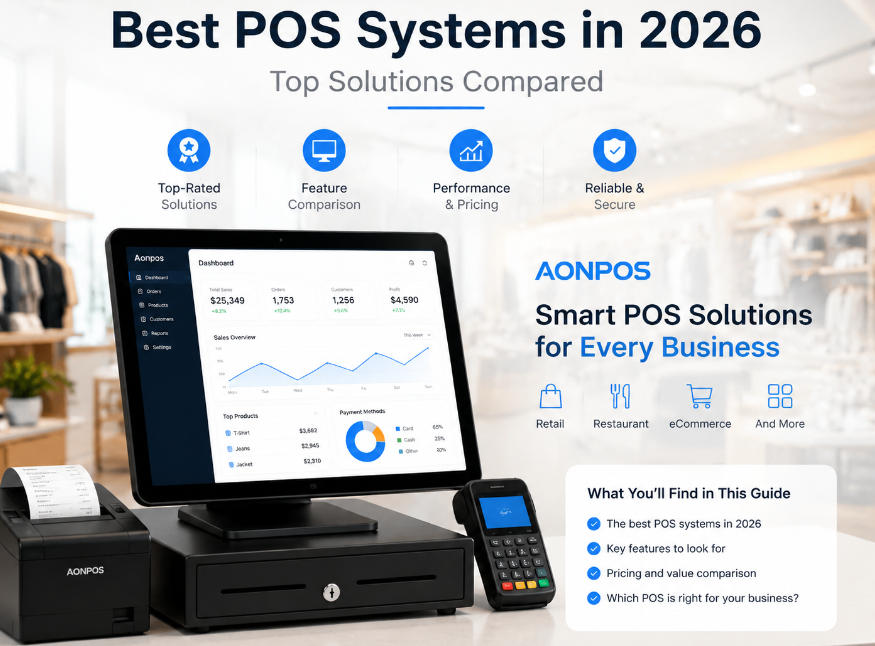
    Choosing the right POS system is critical for businesses aiming to streamline operations, boost efficiency, and enhance customer experience. In 2026, technology has made POS systems smarter, more secure, and highly customizable. This guide compares the top POS systems to help you make an informed decision. Why the Right POS System Matters in 2026 A modern POS system is much more than a cash register—it’s a business hub. It can: Manage inventory and track stock in real time Process payments securely across multiple channels Provide detailed analytics to guide business decisions Integrate with e-commerce, accounting, and CRM platforms When choosing a POS system in 2026, consider ease of use, security, scalability, integration options, and support. Top POS Systems in 2026 1. Aonpos Aonpos is a cloud-based POS system designed for scalability and efficiency. Perfect for retail and hospitality businesses, it offers a customizable interface and robust analytics. Key Features: Multi-location management Mobile POS for on-the-go transactions AI-powered sales analytics Offline mode for uninterrupted operations Why It Stands Out: Aonpos balances advanced functionality with user-friendly design, making it one of the best POS systems 2026. 2. Square POS Square remains a popular choice, especially for small to medium-sized businesses. Its ecosystem includes payment processing, reporting tools, and an app marketplace for customization. Key Features: Easy setup with minimal technical expertise Inventory and employee management Contactless payment and mobile wallet support 3. Lightspeed POS Lightspeed excels in retail and restaurant environments, offering detailed reporting, omnichannel sales management, and loyalty program integration. Key Features: Advanced analytics for informed decision-making Integration for online and offline sales channels CRM and customer engagement tools 4. Toast POS Toast is specifically designed for restaurants, delivering features that optimize menu management, online ordering, and staff scheduling. Key Features: Integrated online ordering and delivery management Real-time inventory tracking Payroll and employee scheduling tools How to Choose the Best POS System for Your Business When selecting the best POS system 2026, keep these tips in mind: Identify Your Needs: Decide which features are essential, such as mobile payments, CRM integration, or loyalty programs. Check Scalability: Ensure the system can grow with your business. Evaluate Support: Choose a system with strong customer support and regular software updates. Verify Integrations: Make sure it works with your existing tools and software. Conclusion The best POS system in 2026 is one that combines usability, security, and scalability to optimize your business operations. From comprehensive solutions like Aonpos to specialized platforms like Toast and Lightspeed, there are options to suit every business need. Choosing the right system today ensures better customer experiences, smoother operations, and long-term growth.
  • All-in-One POS vs Traditional Cash Register: Which Is Better for Modern Businesses?
    All-in-One POS vs Traditional Cash Register: Which Is Better for Modern Businesses? May 26, 2026
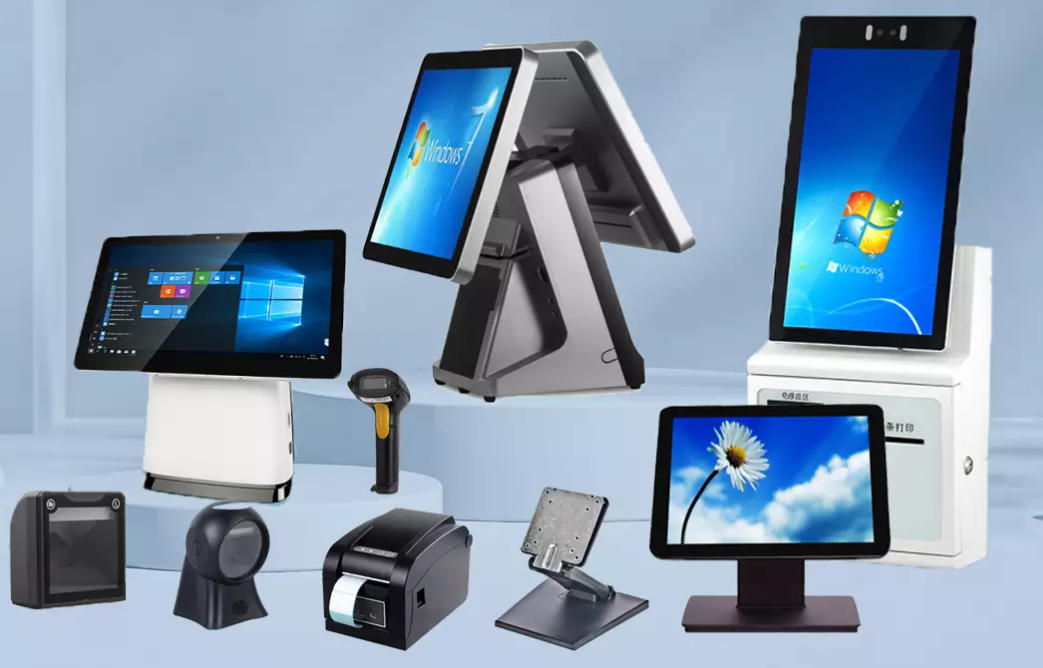
    In today’s fast-changing retail and hospitality landscape, businesses need more than just a way to process payments. The debate around POS vs cash register has become increasingly important as companies look for smarter, faster, and more scalable solutions to manage operations. While traditional cash registers were once the standard for retail stores and restaurants, modern all-in-one POS systems now offer advanced business management tools that go far beyond simple transactions. But which option is right for your business? This guide compares all-in-one POS systems and traditional cash registers in terms of functionality, cost, efficiency, and long-term value. What Is a Traditional Cash Register? A traditional cash register is a basic device used to calculate sales, store cash, and print receipts. These systems have been used in retail for decades and are designed mainly for handling transactions. Key Features of Traditional Cash Registers Cash drawer management Receipt printing Basic sales calculations Simple reporting functions Offline operation Traditional cash registers are typically easy to use and require minimal training. For very small businesses with limited daily transactions, they may still serve a practical purpose. However, as customer expectations and business operations become more digitalized, cash registers often lack the flexibility and intelligence modern businesses require. What is an All-in-One POS System? An all-in-one POS (Point of Sale) system combines payment processing, inventory management, customer analytics, employee management, and reporting tools into one integrated platform. Unlike conventional cash registers, POS systems are designed to help businesses streamline operations and improve customer experiences. Common Features of Modern POS Systems Touchscreen interface Inventory tracking Sales analytics and reporting CRM and customer loyalty tools Multi-payment support Employee management Cloud-based data synchronization Integration with eCommerce platforms Brands like Aonpos provide integrated POS solutions that support retailers, restaurants, supermarkets, and hospitality businesses looking for scalable and efficient operations. POS vs Cash Register: Key Differences 1. Functionality The biggest difference between a POS system and a cash register is functionality. Traditional Cash Register A cash register mainly focuses on processing sales transactions. It records purchases, stores cash, and prints receipts. All-in-One POS A POS system acts as a complete business management solution. In addition to payment processing, it can track inventory, generate sales reports, manage employees, and even support online ordering. If your business needs operational insights and automation, a POS system offers significantly more capabilities. 2. Inventory Management Inventory management is where modern POS systems outperform traditional cash registers. Cash Register Most cash registers do not track inventory automatically. Employees often need to manually count stock and update records separately. POS System An all-in-one POS automatically updates inventory after every sale. This helps businesses: Reduce stock errors Prevent overselling Monitor best-selling products Improve purchasing decisions For businesses with multiple products or locations, this feature can save substantial time and labor costs. 3. Reporting and Analytics Business data is essential for growth. Cash Register Traditional cash registers provide limited reporting, often only basic daily sales totals. POS System Modern POS systems generate detailed analytics, including: Sales trends Peak business hours Product performance Employee productivity Customer purchasing behavior Solutions from companies such as Aonpos often include real-time reporting dashboards that help businesses make data-driven decisions. 4. Payment Flexibility Consumer payment preferences have evolved rapidly. Cash Register Traditional registers primarily support cash transactions and sometimes basic card terminals. POS System Modern POS systems support: Credit and debit cards Mobile wallets Contactless payments QR code payments Online and offline transactions This flexibility improves customer convenience and speeds up checkout processes. 5. Customer Experience Today’s customers expect fast, seamless service. Cash Register Traditional systems may slow down operations during busy hours due to manual processes. POS System All-in-one POS solutions improve customer experience through: Faster checkout Digital receipts Loyalty programs Personalized promotions Accurate order management In industries such as restaurants and retail, efficient service can directly impact customer retention. 6. Scalability As businesses grow, operational complexity increases. Cash Register Cash registers are difficult to scale across multiple stores or channels. POS System Cloud-based POS platforms allow businesses to: Manage multiple locations Synchronize inventory Access reports remotely Expand into eCommerce This makes POS systems more suitable for growing businesses and franchise operations. Cost Comparison: POS vs Cash Register Traditional Cash Register Costs Traditional cash registers usually have lower upfront costs. Small standalone models can be relatively inexpensive, making them attractive for startups with limited budgets. However, they may require: Separate payment terminals Manual inventory systems Additional accounting processes Over time, these inefficiencies can increase operational expenses. All-in-One POS Costs POS systems generally involve higher initial investment because they include software, hardware, and advanced functionality. Yet many businesses find that the long-term benefits outweigh the cost through: Improved efficiency Reduced human error Better inventory control Increased sales insights Modern providers like Aonpos offer scalable POS hardware and software solutions suitable for businesses of different sizes. Which Businesses Should Use a Cash Register? A traditional cash register may still work well for: Small kiosks Temporary stores Businesses with very limited inventory Cash-only operations If your operation is simple and transaction volume is low, a cash register can remain a cost-effective option. Which Businesses Should Choose an All-in-One POS? An all-in-one POS system is ideal for: Retail stores Restaurants and cafés Supermarkets Convenience stores Multi-location businesses Businesses planning to scale If your company needs operational visibility, inventory automation, and modern payment capabilities, investing in a POS system is often the smarter long-term decision. Final Thoughts: POS vs Cash Register When comparing POS vs cash register, the right choice depends on your business size, operational complexity, and future growth plans. Traditional cash registers are simple and affordable, but they offer limited functionality. In contrast, all-in-one POS systems provide advanced business management tools that help companies improve efficiency, customer experience, and profitability. As digital payments and data-driven operations continue to shape the retail and hospitality industries, more businesses are transitioning from traditional cash registers to integrated POS solutions. For businesses seeking scalable and modern technology, companies like Aonpos provide solutions designed to support both current operations and future expansion.
  • Best Self-Service Ordering Machine Manufacturers and Suppliers in China
    Best Self-Service Ordering Machine Manufacturers and Suppliers in China Jan 26, 2026
    Walk into a modern restaurant, food court, or convenience store almost anywhere in the world, and you’ll see the same thing: customers ordering from a screen instead of a counter. Behind many of those screens are self-service ordering machine manufacturers in China, quietly powering the shift toward faster, smarter, and more efficient service. China isn’t just assembling these machines—it’s shaping how they’re designed, customized, and deployed globally. For brands, distributors, and system integrators, choosing the right self-service ordering machine supplier in China has become a strategic business decision rather than a simple sourcing task. This article looks at why China dominates this market, what to expect from leading suppliers, and which manufacturers are worth paying attention to. Why China Has Become the Go-To Source for Self-Service Ordering Machines China’s strength in this industry isn’t accidental. It’s the result of years of investment in electronics manufacturing, software integration, and commercial hardware design. For buyers, the advantages are practical and measurable: Everything is built locally – touch displays, industrial PCs, scanners, printers, payment modules, and metal housings OEM and ODM are standard, not “special requests” Cost control is realistic, even for customized orders Export experience is mature, with CE, FCC, and RoHS compliance widely supported This combination makes Chinese factories especially competitive in producing restaurant self-ordering machines, touch screen ordering kiosks, and integrated POS ordering systems at scale. What Chinese Self-Service Ordering Machine Manufacturers Actually Produce A common misconception is that Chinese suppliers only offer “generic kiosks.” In reality, most self-service ordering machine manufacturers in China offer highly configurable product lines, including: Floor-standing and wall-mounted self ordering kiosks Touch screen POS ordering machines for restaurants QR-code and mobile-payment-based ordering terminals Outdoor self-service ordering machines with weatherproof enclosures Multi-language, multi-currency systems for international markets These machines are already widely used in fast food chains, cafés, cinemas, hospitals, airports, and retail environments across North America, Europe, and Southeast Asia. What Separates a Good Supplier from a Risky One From a buyer’s perspective, the real difference between suppliers shows up after the machines are installed. Experienced self-service ordering machine suppliers in China usually share a few traits: Industrial-grade touch screens built for long daily operating hours Stable operating systems (Android, Windows, or Linux) Smooth integration with POS, ERP, and kitchen display systems Support for modern payment methods (QR code, NFC, card, cashless) Clear processes for customization, testing, and firmware updates In short: they think like long-term partners, not short-term sellers. Top Self-Service Ordering Machine Manufacturers and Suppliers in China Below are five established self-service ordering machine manufacturers or suppliers in China that are frequently mentioned by international buyers. This is not a ranking, but a practical reference list. 1. GRG Banking (GRGBanking) Originally known for banking automation, GRG Banking has expanded into commercial self-service terminals with strong engineering depth, high reliability standards, and large-scale deployment experience. 2. Hisense Commercial Display Hisense brings strong display technology into the self ordering kiosk space, making it a solid choice for projects where screen quality, brand image, and long-term stability matter. 3. Sunmi Technology Sunmi is widely used in the food service sector, particularly for Android-based restaurant self-ordering machines. Its products are popular with chains looking for modern design and a ready-made software ecosystem. 4. Aonpostech Aonpostech focuses on customized self-service ordering machines and smart POS terminals, with flexible OEM and ODM services. The company is often chosen by overseas distributors and system integrators who need tailored hardware configurations and consistent export support. 5. PAX Technology Best known for payment terminals, PAX offers integrated self-service ordering solutions with strong security and payment compatibility—an important factor for international restaurant and retail deployments. Together, these companies reflect the range of options available from self-service ordering machine suppliers in China, from large-scale industrial players to flexible OEM-focused manufacturers. How to Choose the Right Self-Service Ordering Machine Supplier in China If you’re sourcing for the long term, price alone shouldn’t drive the decision. A professional evaluation usually includes: Manufacturing transparency – factory access, testing processes, quality control Customization depth – real OEM/ODM capability, not just logo printing Export track record – documentation, certifications, and logistics support Technical communication – clear answers, firmware support, update cycles Scalability – the ability to support repeat orders and market expansion The best self ordering kiosk manufacturers in China understand that your success in the market is tied directly to theirs. China’s Growing Influence in the Global Self-Ordering Market China’s role has evolved from “hardware supplier” to solution provider. Many manufacturers now combine industrial design, embedded software, payment integration, and cloud-based management into a single offering. For international buyers, this means faster deployment, better customization, and more competitive pricing—without sacrificing reliability. Choosing the right self-service ordering machine manufacturer & supplier in China can significantly impact customer experience, operational efficiency, and long-term costs. With the right partner, these machines become more than hardware—they become a scalable part of your business infrastructure. China remains one of the strongest sourcing options in the world for businesses ready to invest in smart, automated ordering solutions.
  • POS Systems for Clothing Retailers: A Complete Guide to Smarter Fashion Store Operations
    POS Systems for Clothing Retailers: A Complete Guide to Smarter Fashion Store Operations Jul 12, 2026
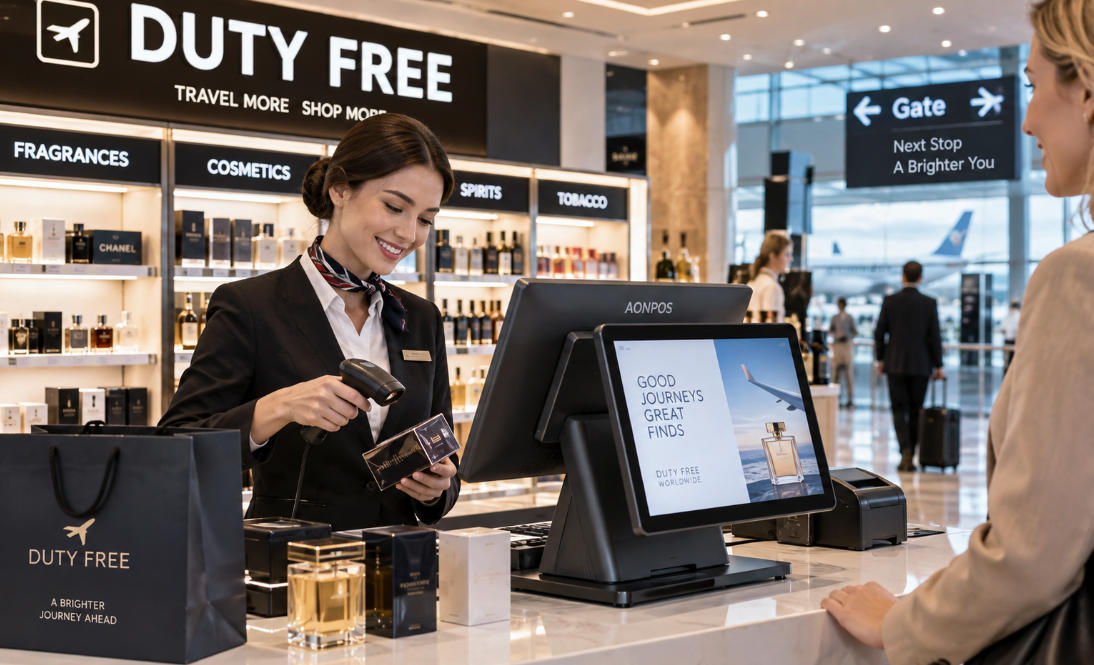
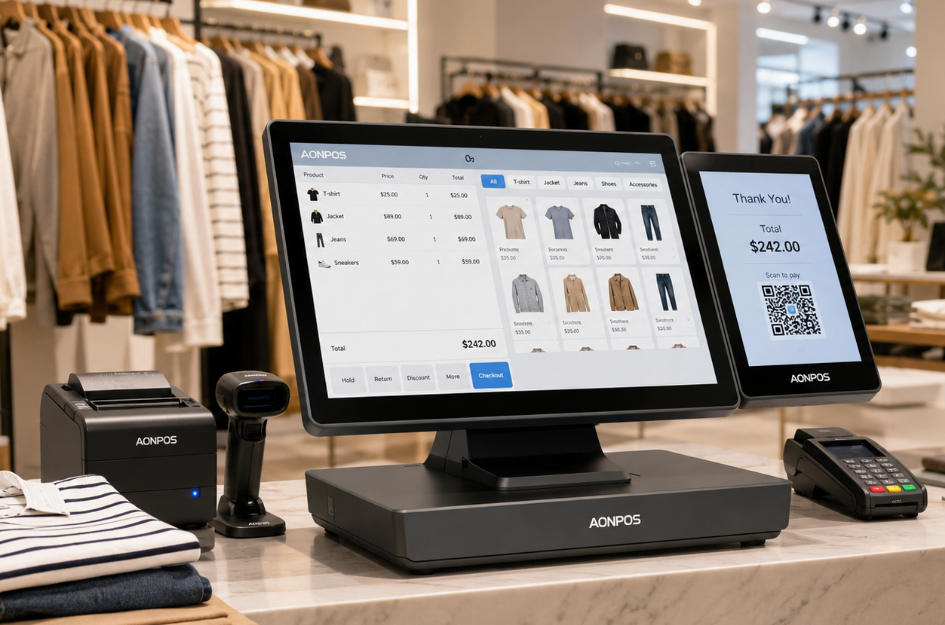
    Clothing retail is more complex than simply scanning an item and accepting payment. Fashion stores must manage products in multiple sizes, colors, styles, seasons, and locations while delivering a fast and personalized customer experience. The right POS Systems can bring these activities together in one connected retail environment. From processing transactions and managing product variants to supporting loyalty programs and omnichannel sales, a modern point-of-sale system can become the operational center of a clothing store. In this guide, we explore the essential features clothing retailers should consider when choosing a POS system, the hardware required for different fashion retail environments, and how AONPOS can support retail technology providers with customizable POS hardware. What Are POS Systems for Clothing Retailers? POS Systems for clothing retailers combine hardware and software to process sales and support daily store operations. Unlike a basic cash register, a retail POS system can connect checkout activities with inventory records, customer information, employee management, promotions, and sales reporting. A typical clothing store POS setup may include: A touchscreen POS terminal Retail POS software A barcode scanner A receipt printer A cash drawer A card or contactless payment terminal A customer-facing display A handheld inventory device Cloud-based reporting and store management tools Retailers can explore different configurations through the AONPOS POS system range, which includes all-in-one terminals designed for retail, hospitality, and other commercial environments. Why Clothing Retailers Need Specialized POS Systems Fashion retailers face inventory and customer-service challenges that are different from those of restaurants, convenience stores, and other businesses. One shirt, for example, may be available in five sizes, four colors, and several seasonal collections. Although customers see these items as variations of the same product, each variation usually requires an individual SKU and accurate stock record. Modern POS Systems help clothing retailers manage this complexity while maintaining an efficient checkout process. Managing Sizes, Colors, and Product Variants Product variation management is one of the most important requirements for a clothing store. A suitable POS system should allow retailers to organize products according to: Style Brand Size Color Material Collection Season Supplier SKU Barcode When an item is sold, returned, exchanged, transferred, or received, the system should update the correct variation rather than simply adjusting the total quantity of the general product. This level of accuracy helps prevent situations in which the system shows that a product is available while the customer’s preferred size or color is actually out of stock. Improving Checkout Speed Customers expect checkout to be quick, especially during weekends, seasonal promotions, and holiday sales. An efficient clothing retail POS station should support: Fast barcode scanning Responsive touchscreen operation Multiple payment methods Automatic promotion calculation Digital or printed receipts Customer lookup Quick exchanges and returns A commercial all-in-one POS terminal can reduce the number of separate devices on the counter and create a cleaner checkout area that fits the visual design of a modern fashion store. Supporting Returns and Exchanges Returns are a normal part of apparel retail. Customers may purchase the wrong size, change their mind about a color, or exchange an online order in a physical store. A clothing retail POS system should make it easy to: Locate the original transaction Verify the purchase Exchange one size or color for another Calculate price differences Return inventory to the correct location Issue refunds or store credit Track reasons for returns A clear returns workflow improves customer satisfaction while giving management better visibility into product quality, sizing issues, and buying patterns. Essential Features of Clothing Retail POS Systems Not every POS solution is equally suitable for fashion retail. Retailers and solution providers should evaluate both software capabilities and hardware performance before selecting a system. 1. Real-Time Inventory Management Real-time inventory visibility helps staff answer customer questions immediately. Instead of checking the stockroom manually, an employee should be able to use the POS terminal or a mobile device to confirm whether a particular size or color is available in the current store, another branch, or a warehouse. The system should also support: Low-stock notifications Purchase-order management Stock receiving Inter-store transfers Cycle counting Inventory adjustments Seasonal stock analysis For growing retailers, real-time inventory information can reduce stockouts, avoid unnecessary overstocking, and improve purchasing decisions. 2. Barcode and SKU Management Clothing retailers may handle hundreds or thousands of SKUs. Barcode support makes it easier to identify the correct item variation during checkout, stock receiving, counting, and returns. Reliable POS hardware should provide sufficient connectivity for barcode scanners, printers, customer displays, and other retail peripherals. The AONPOS AP14 retail POS terminal, for example, features a 15-inch capacitive touchscreen and configurable processing, memory, and storage options, making it suitable for different retail software requirements. 3. Customer Relationship Management Fashion purchases are often influenced by personal preferences, previous purchases, style, and brand loyalty. When connected to CRM or loyalty software, POS Systems can help retailers record useful customer information such as: Purchase history Preferred brands Common sizes Loyalty points Store credit Birthday rewards Marketing preferences Average order value Sales associates can use this information to provide more relevant recommendations and create a more personalized shopping experience. Retailers must, however, collect and use customer information responsibly and follow applicable privacy and data-protection requirements. 4. Promotion and Discount Management Fashion stores frequently run promotions based on seasons, collections, membership levels, product categories, or purchase quantities. A suitable POS platform should support promotions such as: Percentage discounts Fixed-value discounts Buy-one-get-one offers Bundle pricing Member-only pricing Coupon codes Clearance markdowns Time-limited promotions Automatic discount rules Automated promotion calculation reduces manual errors and ensures that customers receive consistent pricing across employees and store locations. 5. Omnichannel Retail Support Many clothing retailers now sell through physical stores, online shops, social platforms, and marketplaces. POS Systems can support omnichannel retail by connecting store transactions with e-commerce operations. Depending on the software platform, retailers may offer services such as: Buy online and pick up in store Buy online and return in store Ship from store Reserve online and try in store Endless-aisle ordering Unified customer profiles Shared inventory visibility For retailers evaluating the wider role of modern POS technology, the AONPOS guide to all-in-one POS systems versus traditional cash registers explains why connected POS infrastructure offers more operational capabilities than conventional cash-register hardware. 6. Multi-Store Management A clothing brand may begin with one boutique and later expand to several stores, franchise locations, or shop-in-shop counters. Scalable POS Systems should allow managers to monitor multiple locations from a central platform. Useful multi-store capabilities include: Centralized product catalogs Location-level inventory Store-to-store transfers Unified promotions Employee permissions Consolidated sales reports Location performance comparisons Central price management Retailers should choose hardware that can be standardized across locations while still accommodating different counter layouts and operating requirements. 7. Sales Reporting and Analytics POS data can help clothing retailers understand what customers are buying and how store performance changes over time. Useful reports may include: Sales by product Sales by size or color Best-selling and slow-moving items Gross margin by category Sales by employee Sales by store Return rates Discount performance Inventory turnover Hourly and daily transaction volumes These insights can support merchandising, purchasing, staffing, promotion planning, and seasonal inventory decisions. POS Hardware Required for a Clothing Store POS software is only effective when it runs on dependable commercial hardware. Clothing retailers should select each hardware component according to the size, layout, and sales model of the store. Touchscreen POS Terminal The main terminal should provide a responsive interface, stable performance, sufficient connection ports, and compatibility with the retailer’s chosen operating system and software. Common options include: 12-inch compact terminals for small counters 15-inch terminals for standard retail checkout 15.6-inch widescreen terminals for modern applications Single-screen systems for simple checkout Dual-screen systems for customer engagement AONPOS provides a broad selection of touchscreen POS hardware for commercial deployments, including Windows-based all-in-one terminals and configurable retail models. Customer-Facing Display A second screen allows customers to review items, quantities, prices, discounts, and totals before payment. It can also be used to display: Loyalty enrollment prompts Promotional campaigns New collections Brand videos Return policies QR codes Digital receipt options A dual-screen POS system can improve transaction transparency while creating an additional communication channel at the checkout counter. Retailers comparing display configurations can also read the guide to dual-screen versus single-screen POS systems. Barcode Scanner A barcode scanner reduces manual data entry and helps staff select the exact SKU associated with each size and color. Retailers should consider scanning speed, supported barcode formats, reading distance, connection type, and the ability to scan damaged or poorly printed labels. Receipt Printer Receipt printers remain important for customers who prefer printed proof of purchase and for stores with specific return-policy requirements. Depending on the store environment, retailers may choose: Thermal receipt printers Integrated printers Network printers USB printers Bluetooth printers A compact POS configuration with integrated peripherals can save counter space in boutiques and mall kiosks. Cash Drawer Although digital payments continue to grow, many clothing stores still need to accept cash. The cash drawer should be durable, easy for authorized employees to operate, and compatible with the POS terminal or receipt printer. Payment Terminal The payment device should support the payment methods commonly used in the retailer’s target market, which may include: Chip cards Contactless cards Mobile wallets QR-code payments Magnetic-stripe cards Gift cards Store credit Payment devices and POS terminals must be deployed according to the requirements of the payment processor, acquiring bank, software provider, and applicable security standards. Handheld POS and Inventory Devices Handheld devices can give sales associates access to product and inventory information without returning to the main counter. They may be used for: In-aisle inventory checks Stock counting Receiving deliveries Looking up sizes and colors Creating customer profiles Mobile checkout Queue reduction Pop-up sales AONPOS offers Android handheld POS terminals for mobile retail and operational applications. Such devices can complement fixed checkout stations in larger fashion stores or high-traffic sales environments. Fixed POS vs. Mobile POS for Clothing Retailers Many fashion retailers benefit from combining fixed and mobile POS hardware rather than choosing only one format. Fixed POS Systems A fixed POS station is usually the best choice for: Main checkout counters Cash transactions Returns and exchanges Gift wrapping Receipt printing Security-controlled operations It provides a consistent location for transactions and can connect to multiple peripherals. Mobile POS Systems Mobile POS devices are useful for: Assisting customers on the sales floor Checking stock availability Processing transactions during peak periods Operating pop-up stores Supporting outdoor promotional events Reducing queues near fitting rooms or entrances The best configuration depends on store size, customer volume, payment requirements, and software compatibility. How to Choose POS Systems for a Clothing Store Retailers should evaluate a POS solution as a long-term operational investment rather than selecting it only according to purchase price. Define the Store’s Operational Requirements Before comparing products, retailers should identify: Number of store locations Number of checkout stations Daily transaction volume Number of SKUs Required peripherals Preferred operating system Existing retail software E-commerce integrations Mobile POS requirements Future expansion plans Clear requirements make it easier to avoid paying for unnecessary functions or selecting hardware that cannot support future growth. Confirm Software and Hardware Compatibility Retailers should confirm that the POS hardware supports their selected software, operating system, ports, drivers, screen resolution, and peripheral connections. Software developers and system integrators may also need customized BIOS settings, branded startup screens, preinstalled system images, or specific processor and memory configurations. Prioritize Commercial Reliability Consumer computers and tablets may appear cost-effective, but they are not always designed for continuous commercial use. Retail environments require hardware that can handle: Long operating hours Repeated touchscreen use Frequent peripheral connections Dust and daily cleaning High transaction volumes Continuous software operation Commercial POS hardware can provide a more stable foundation for daily store operations. Evaluate Counter Space and Store Design The appearance of POS hardware matters in fashion retail. A large or cluttered checkout setup can conflict with a carefully designed store interior. Retailers should consider: Terminal footprint Cable management Screen size Housing color Mounting options Peripheral placement Customer-screen design Brand consistency Compact all-in-one hardware can create a cleaner counter and leave more space for packaging, accessories, or customer interaction. Consider Scalability A POS setup that works for one boutique may not be suitable for a growing chain. Scalable POS Systems should make it possible to add: More terminals Additional stores Customer-facing displays Handheld devices New peripherals Updated software configurations Standardizing hardware across locations can simplify employee training, technical support, spare-parts planning, and device maintenance. Common Mistakes to Avoid Selecting a System Based Only on Price The lowest-cost terminal may create higher long-term costs if it has limited connectivity, poor component quality, insufficient performance, or limited upgrade options. Retailers should compare total cost of ownership, including maintenance, downtime, peripheral replacement, software compatibility, and expected service life. Ignoring Product Variant Management A generic checkout solution may process payments successfully but fail to manage sizes, colors, and style variations efficiently. For clothing retailers, variant-level inventory control should be treated as a core requirement. Overlooking Returns and Exchange Workflows A complicated return process slows employees and frustrates customers. The POS software should make exchanges between different sizes and colors straightforward. Failing to Plan for Peak Seasons Stores should evaluate whether the POS infrastructure can support higher transaction volumes during holidays, clearance events, product launches, and seasonal promotions. Adding temporary mobile terminals or an extra checkout station can help reduce queues. Choosing Hardware Before Confirming Software Requirements Processors, memory, storage, operating systems, display sizes, and ports should be selected according to the software environment. Retailers, software providers, and hardware manufacturers should confirm compatibility before large-scale deployment. How AONPOS Supports Clothing Retail POS Projects AONPOS is a POS hardware manufacturer offering all-in-one touch terminals, dual-screen systems, handheld devices, monitors, printers, barcode scanners, and other retail peripherals. For clothing retail deployments, AONPOS hardware can support applications such as: Boutique checkout counters Department-store fashion areas Multi-location clothing chains Shoe and accessory stores Sportswear retailers Pop-up shops Outlet stores Inventory-management stations Mobile sales environments In addition to standard products, AONPOS provides OEM and ODM support for POS software companies, distributors, system integrators, and retail technology brands. Customization requirements may include: Brand logos Housing colors Processor configurations Memory and storage options Customer-facing displays Operating-system installation Peripheral integration Packaging Product labeling System image deployment Businesses developing their own retail solution can learn more about AONPOS through the company’s OEM and ODM POS manufacturing capabilities. Recommended AONPOS Hardware Configurations Different clothing retail formats require different POS configurations. Small Boutique A practical configuration may include: One compact all-in-one POS terminal Barcode scanner Receipt printer Cash drawer Payment terminal This setup keeps the checkout area organized while covering essential transaction requirements. Medium-Sized Fashion Store A suitable configuration may include: One or two 15-inch POS terminals Customer-facing displays Barcode scanners Receipt printers Cash drawers One handheld inventory terminal The handheld device can help employees check product availability and perform stock-related tasks on the sales floor. Large Clothing Chain A multi-location deployment may require: Standardized all-in-one POS terminals Dual-screen checkout stations Multiple barcode scanners Network receipt printers Handheld inventory devices Centralized device configuration Customized system images Spare-unit and maintenance planning An experienced hardware partner can help ensure that device specifications remain consistent across branches and future store openings. Pop-Up Store or Temporary Fashion Event A portable configuration may include: Handheld POS terminal Mobile receipt printer Barcode scanner Wireless connectivity Compact backup power solution This setup can reduce installation complexity while giving employees the flexibility to sell in temporary locations. Frequently Asked Questions What is the best POS system for a clothing store? The best solution depends on the store’s size, SKU volume, number of locations, sales channels, and software requirements. In general, clothing retailers should prioritize product-variant management, real-time inventory, fast barcode scanning, returns, loyalty features, reporting, and omnichannel integration. Can POS Systems track clothing sizes and colors? Yes. Suitable retail POS software can assign an individual SKU or barcode to every size, color, and style combination. This allows inventory to be tracked at the variant level. Do small clothing boutiques need a POS system? A small boutique can benefit from a POS system because it combines checkout with inventory records, customer management, sales reporting, and promotion control. A compact all-in-one terminal may provide the necessary functionality without occupying excessive counter space. Is a dual-screen POS useful for fashion retail? A dual-screen system can show customers their selected items, quantities, discounts, and payment totals. The secondary display can also present loyalty messages, new collections, promotional content, or digital receipt options. Can a clothing store use handheld POS devices? Yes. Handheld devices can be used for mobile checkout, product lookup, stock counting, receiving, and line busting. They are particularly useful in larger stores, pop-up shops, and busy promotional periods. Can AONPOS customize POS hardware for retail software providers? AONPOS supports OEM and ODM projects for distributors, software providers, integrators, and retail technology brands. Available customization depends on the product model, project requirements, and order specifications. Conclusion Modern POS Systems give clothing retailers more than a way to accept payments. They connect checkout, inventory, customer engagement, promotions, reporting, returns, and omnichannel operations. When selecting a system, clothing retailers should focus on variant-level inventory management, commercial hardware reliability, software compatibility, scalable configurations, and an efficient customer experience. For POS software companies, distributors, and system integrators, choosing a flexible hardware manufacturer is equally important. With all-in-one terminals, dual-screen solutions, handheld devices, and OEM/ODM capabilities, AONPOS can provide a configurable hardware foundation for clothing retail POS projects. Explore the complete AONPOS POS system collection or contact AONPOS to discuss hardware specifications, customization requirements, and retail deployment plans.
  • POS Solutions for Convenience Stores: How to Build a Faster and More Reliable Checkout
    POS Solutions for Convenience Stores: How to Build a Faster and More Reliable Checkout Jul 10, 2026
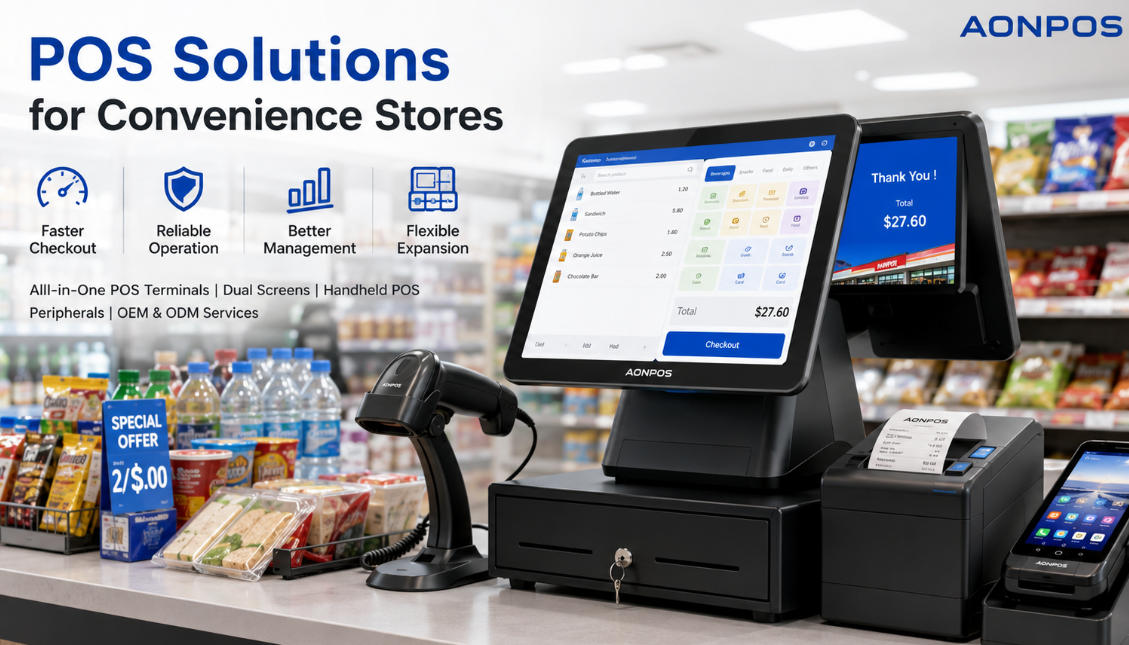
    Convenience stores are built around speed. Customers expect to enter, find what they need, pay quickly, and continue with their day. Even a short delay at the checkout counter can create a visible queue, especially during morning rush hours, lunch breaks, late-night traffic, or promotional periods. For store operators, however, speed is only one part of the challenge. A convenience store may process hundreds of small transactions each day while managing a wide range of products, barcode formats, payment methods, employee shifts, and inventory changes. A well-designed convenience store POS solution brings these activities together at one reliable checkout point. With the right POS hardware, retailers can improve transaction efficiency, reduce cashier errors, make better use of limited counter space, and create a more consistent customer experience. This guide explains what convenience stores should look for in a POS solution and how suitable hardware can support both independent retailers and multi-location chains. What Is a Convenience Store POS Solution? A convenience store POS solution is the combination of hardware, software, payment equipment, and peripherals used to complete transactions and support everyday retail operations. A typical setup may include: An all-in-one touchscreen POS terminal POS or retail management software A barcode scanner A receipt printer A cash drawer A customer-facing display A card or contactless payment terminal Optional handheld POS devices Unlike a traditional cash register that mainly records sales and stores cash, a modern POS environment can connect checkout activity with inventory records, product databases, employee permissions, promotions, and sales reporting. The POS terminal acts as the main operating platform. Its processor, display, connectivity, ports, and physical construction can all affect how reliably the complete system performs. Why Convenience Stores Have Specific POS Requirements Convenience stores operate differently from many other retail businesses. They usually have smaller floor areas, longer opening hours, frequent low-value transactions, and a broad mix of fast-moving products. These operating conditions create several important requirements. Fast Transaction Processing Customers often visit convenience stores because they want to make a quick purchase. Slow product searches, delayed barcode input, or unresponsive touchscreens can significantly affect the checkout experience. A suitable convenience store POS terminal should provide responsive touch control and sufficient computing performance for the retailer’s selected POS software, product database, and connected peripherals. Reliable Operation During Long Business Hours Many convenience stores operate from early morning until late at night, while some remain open 24 hours a day. The checkout terminal may therefore be used continuously across multiple employee shifts. Commercial POS hardware should be designed for frequent daily use. Stable internal components, appropriate heat management, durable enclosures, and reliable storage are especially important in long-hour retail environments. Support for Large Product Databases Although convenience stores are usually compact, they may stock thousands of SKUs, including packaged food, beverages, household products, personal-care items, and seasonal merchandise. The selected terminal should be able to run the store’s inventory and checkout software smoothly as the product database grows. Compatibility With Multiple Peripherals A convenience store checkout station may need to connect with several devices at the same time. These can include a barcode scanner, receipt printer, cash drawer, weighing scale, payment terminal, customer display, or membership card reader. Before purchasing hardware, buyers should check the number and type of available interfaces. USB, serial, LAN, audio, display, and cash-drawer connectivity may all be relevant, depending on the planned deployment. Efficient Use of Counter Space Counter space is valuable in a convenience store. The checkout area may also contain impulse-purchase products, payment equipment, shopping bags, promotional materials, and security devices. An all-in-one POS system combines the touchscreen and computer components into one unit, helping reduce cable clutter and create a cleaner checkout area. Essential Features of a Convenience Store POS System The best configuration depends on the store’s software, transaction volume, and operating model. However, several features are particularly important for convenience retail. 1. Responsive Touchscreen Operation Cashiers repeatedly select items, enter quantities, apply discounts, and choose payment methods. A responsive capacitive touchscreen can make these actions faster and more intuitive. A flat touchscreen surface is also easier to clean than a traditional keyboard-based checkout setup, which can be useful in stores selling food and beverages. Screen size should be selected according to counter space and software layout. A 15-inch display is a common option because it provides enough room for product buttons and transaction details without requiring an excessively large installation area. For stores with particularly limited space, a smaller terminal such as a compact 12-inch POS may be more appropriate. 2. Barcode Scanner Integration Barcode scanning is central to convenience store operations. It reduces manual product entry and helps cashiers process transactions more accurately. The scanner should read the barcode types used across the store’s product range. Retailers may choose among handheld, presentation, or embedded scanners depending on checkout volume and counter layout. A fixed presentation scanner can be useful at busy counters because the cashier can move products past the scanning window with both hands. A handheld scanner offers greater flexibility for large or awkwardly shaped products. 3. Receipt Printer Compatibility Thermal receipt printers are commonly used in retail because they print quickly and do not require ink cartridges. For convenience stores with high daily transaction volumes, print speed, cutter durability, paper width, and ease of paper replacement should be considered. The printer must also be compatible with the selected operating system and POS software. 4. Multiple Payment Options Modern shoppers may expect to pay using cash, bank cards, mobile wallets, QR codes, or other local payment methods. Payment processing is normally handled through compatible third-party payment terminals and software. Therefore, retailers should confirm that their selected POS environment can connect to the required payment equipment. Handheld payment devices may also provide additional flexibility. A portable terminal can support queue reduction, curbside collection, mobile selling, or temporary checkout points during busy periods. AONPOS offers a range of handheld POS terminals designed for mobile retail and payment-related applications. Available models include configurations with touchscreens, wireless connectivity, barcode scanning, or built-in thermal printing, depending on the device. 5. Customer-Facing Display A second screen can show customers the scanned items, quantities, prices, discounts, and transaction total. This improves transparency and gives customers an opportunity to identify mistakes before payment is completed. The display may also be used for promotional content, membership information, or digital advertising when supported by the retailer’s software. Convenience stores comparing display configurations can review this guide to dual-screen vs. single-screen POS systems. A single-screen terminal is often sufficient for a small independent store with limited counter space. A dual-screen system may be more valuable when customer engagement, order confirmation, or promotional content is a priority. 6. Stable Network Connectivity A POS terminal may need network access for cloud-based management, payment communication, remote support, inventory synchronization, or multi-store reporting. Depending on the installation, connectivity may include: Ethernet Wi-Fi Bluetooth Mobile network connectivity through a separate device Wired Ethernet is generally preferred for a fixed checkout counter because it can provide a stable connection. Wi-Fi offers greater flexibility where running cables is difficult. Retailers should also discuss offline operating requirements with their software provider. The ability to continue recording transactions during a temporary network interruption can be important for stores that cannot afford to stop serving customers. 7. Suitable Processor, Memory, and Storage POS hardware does not need to be a high-end workstation, but its configuration should match the software workload. A basic checkout application may run well on an entry-level commercial processor, while larger databases, multimedia content, multiple integrations, or background applications may require a more powerful CPU and additional memory. Solid-state storage is generally preferred because it supports fast system startup and contains no moving mechanical parts. AONPOS all-in-one terminal configurations are available with different processor, memory, and storage options, allowing system integrators and buyers to select specifications for their software environment. Specific options vary by product and project. 8. Easy Maintenance and Peripheral Replacement Convenience stores cannot tolerate extended checkout downtime. A practical POS deployment should make routine maintenance straightforward. Retailers should consider: Easy access to cables and ports Replaceable external peripherals Clear installation documentation Availability of spare units or replacement parts Remote software support Standardized hardware across store locations For multi-store projects, using the same terminal and peripheral configuration across every branch can simplify employee training, technical support, and spare-parts management. Recommended POS Hardware Configurations There is no single configuration that fits every convenience store. The following deployment models provide a practical starting point. Configuration A: Compact Independent Store A small neighborhood store may only require: One single-screen all-in-one POS terminal One barcode scanner One thermal receipt printer One cash drawer One external payment terminal This setup is suitable for stores with one checkout counter and moderate transaction volume. The compact design helps preserve counter space, while a single-screen terminal keeps hardware costs under control. Configuration B: High-Traffic Convenience Store A busy urban or transport-location store may benefit from: A high-performance all-in-one POS terminal A customer-facing second display A presentation barcode scanner A high-speed receipt printer A cash drawer A contactless payment terminal A backup checkout terminal A dual-screen setup can improve transaction transparency, while a faster scanner and printer help maintain throughput during peak periods. The AONPOS dual-screen POS range includes commercial touchscreen terminals designed for retail checkout environments, with selectable hardware configurations and peripheral connectivity options. Configuration C: Multi-Location Convenience Store Chain A chain deployment may include: Standardized POS terminals across all branches Centralized POS and inventory software Customer-facing displays Integrated barcode scanners and receipt printers Handheld devices for inventory or mobile checkout Remote device management Spare terminals for rapid replacement Consistency is especially important for chains. Standard hardware reduces variation between locations and makes installation, software imaging, support, and employee training easier. Configuration D: Convenience Store With Mobile Checkout Some retailers may need mobile transaction capabilities for: Queue busting Outdoor promotions Curbside pickup Delivery payments Inventory verification Temporary checkout stations In these situations, a fixed terminal can remain the main checkout station while a handheld POS device provides mobility elsewhere in the store. Single-Screen or Dual-Screen POS? Choosing between these formats depends on the checkout process and available space. Advantages of a Single-Screen POS A single-screen terminal offers: A smaller footprint Simpler installation Lower initial hardware cost Fewer cables and display components A practical setup for low- to medium-volume stores The AONPOS AP14, for example, is presented as a compact single-screen terminal suitable for retail environments where space and budget are important considerations. Advantages of a Dual-Screen POS A dual-screen terminal can provide: Customer-visible transaction information Improved price transparency Advertising or promotional space Loyalty-program messaging A more interactive checkout experience The second display is most valuable when the POS software can use it effectively. Buyers should confirm software support before ordering a specific customer-display configuration. All-in-One POS vs. Traditional Cash Register Traditional cash registers remain suitable for very basic transaction recording. However, they are usually less flexible when a retailer needs inventory control, detailed reporting, employee management, or integration with additional systems. An all-in-one POS terminal provides a platform on which compatible retail software can manage a broader range of activities. Compared with a basic register, a modern POS setup can support inventory records, transaction reporting, employee permissions, and other operational tools when these features are included in the installed software. Retailers evaluating both options can read All-in-One POS vs. Traditional Cash Register for a more detailed comparison. How to Choose the Right Convenience Store POS Before selecting a system, retailers, distributors, and solution integrators should define their project requirements clearly. Evaluate the Checkout Workload Consider: Average daily transaction volume Peak-hour transaction volume Number of checkout counters Typical basket size Number of active SKUs Required payment methods Store opening hours A store operating around the clock may place greater emphasis on reliability and spare-unit availability than a small shop with limited opening hours. Confirm Software Compatibility Hardware and software must be evaluated together. Before placing an order, confirm: Required operating system Minimum processor and memory specifications Touchscreen compatibility Display resolution requirements Printer and scanner drivers Payment-terminal integration Customer-display support Required communication ports Do not assume that every peripheral will work automatically with every POS application. Review Physical Installation Conditions Measure the checkout counter and identify the available power outlets, network connections, and cable routes. Also consider: Ambient temperature Dust exposure Risk of liquid spills Screen viewing angle Cashier ergonomics Customer-display position Ventilation around the terminal A technically suitable terminal can still cause operational problems if it does not fit the physical checkout environment. Consider Future Expansion A growing retailer may later add more branches, checkout stations, customer displays, or mobile devices. Choosing scalable hardware configurations from the beginning can help reduce the cost of future expansion. For chain projects, it is also useful to ask how long the selected model or platform is expected to remain available. Compare Total Cost of Ownership The lowest purchase price does not always produce the lowest long-term cost. Total cost of ownership may include: Hardware purchase price Shipping and import costs Software licensing Payment integration Installation Employee training Maintenance Replacement parts Downtime Future expansion Commercial-grade hardware may provide better long-term value when it reduces failures and supports easier servicing. Why Choose AONPOS for Convenience Store POS Hardware? AONPOS is a POS hardware manufacturer offering all-in-one touch POS terminals, touch monitors, kiosk products, printers, barcode scanners, stands, and other checkout peripherals. The company states that it has focused on ODM/OEM manufacturing since 2012. For convenience store projects, AONPOS can support buyers requiring: Multiple Terminal Formats The AONPOS product range includes single-screen, dual-screen, Windows-based, Android-based, desktop, and handheld POS hardware. This allows buyers to create different configurations for compact counters, high-volume checkout stations, customer-facing displays, or mobile retail applications. Configurable Hardware Specifications Selected models are offered with optional processor, memory, storage, display, and peripheral configurations. This gives distributors and system integrators greater flexibility when matching the hardware to their software platform and target market. OEM and ODM Services AONPOS supports OEM/ODM projects for customers that need customized branding or hardware configurations. Depending on order requirements and technical feasibility, customization may include: Brand logos Housing colors Processor and memory options Storage capacity Customer-facing displays Touchscreen sizes Interfaces and built-in modules Product packaging Final specifications should be confirmed directly with the AONPOS team before production. POS Peripherals From One Supplier In addition to terminals, AONPOS manufactures or supplies related checkout equipment, including printers, barcode scanners, touch monitors, and mounting products. Sourcing multiple hardware categories from one supplier may simplify product matching, logistics, and project communication. Support for Small and Large Projects A convenience store solution may involve one checkout terminal or hundreds of devices across a retail chain. A manufacturing partner should be able to support sample testing, specification confirmation, branding, production planning, and repeat orders. Businesses planning a deployment can explore the complete AONPOS POS system collection or learn more about the company’s OEM/ODM manufacturing capabilities. Common Mistakes to Avoid Selecting Hardware Before Confirming the Software The POS application determines many hardware requirements. Buyers should finalize the operating system, drivers, processor needs, and peripheral integrations before selecting a terminal configuration. Focusing Only on the Main Terminal A checkout solution is only as reliable as its connected components. Scanner accuracy, printer stability, network connectivity, and payment integration can all affect transaction speed. Ignoring Peak-Hour Conditions A system that performs adequately during quiet periods may become slow when queues form. Test the complete configuration using realistic transaction loads and product databases. Using Consumer Devices for Continuous Commercial Work Consumer tablets or computers may appear cost-effective but may not provide the ports, mounting options, thermal design, or long-term availability required for a commercial rollout. Failing to Plan for Downtime Stores should prepare for equipment failure, network interruption, or peripheral replacement. A spare terminal, backup printer, documented replacement process, and accessible technical support can reduce disruption. Final Thoughts The right convenience store POS solution should help customers complete purchases quickly while giving employees a stable and straightforward checkout platform. A successful deployment depends on more than choosing an attractive touchscreen. Retailers should evaluate processing performance, software compatibility, peripheral connectivity, counter space, payment requirements, maintenance, and future expansion. For a small independent store, a compact single-screen all-in-one terminal may provide everything required for efficient daily checkout. High-traffic stores may benefit from dual screens, faster peripherals, and backup hardware. Multi-location operators should prioritize standardization, remote support, and long-term model availability. With configurable all-in-one terminals, dual-screen systems, handheld devices, and OEM/ODM services, AONPOS POS hardware solutions can support convenience store projects ranging from individual checkout counters to larger branded retail deployments. Retailers, POS software companies, distributors, and system integrators can contact AONPOS to discuss hardware specifications, samples, customization, and volume requirements.
  • Best Restaurant POS Hardware in 2026: A Complete Buyer's Guide
    Best Restaurant POS Hardware in 2026: A Complete Buyer's Guide Jul 09, 2026
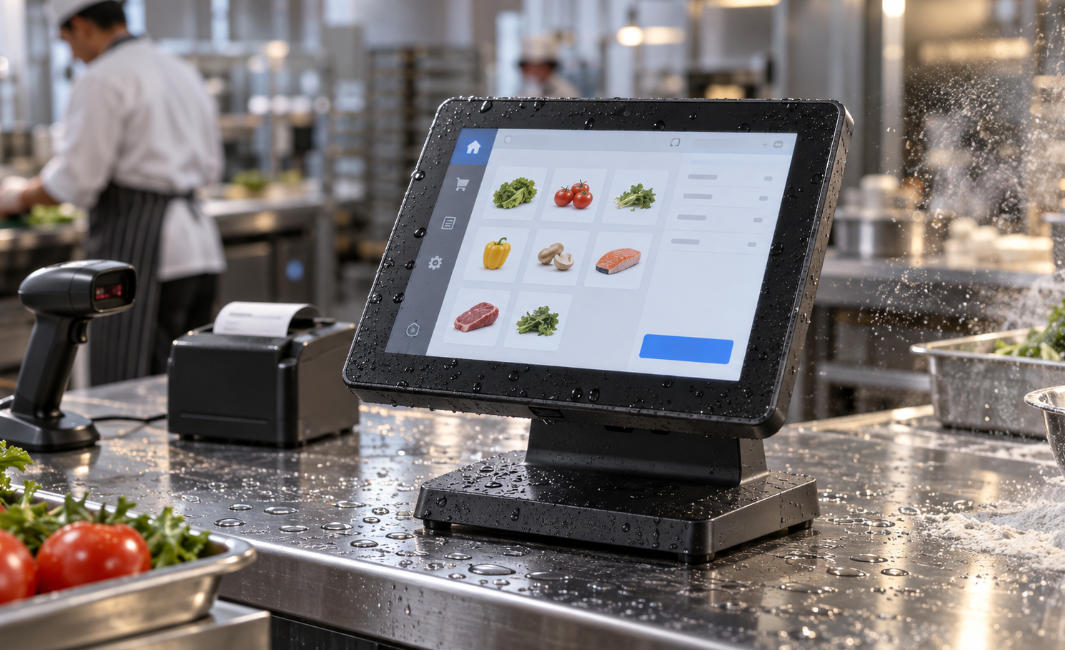
    The restaurant industry continues to evolve rapidly in 2026. Digital ordering, contactless payments, QR code menus, kitchen automation, and self-service ordering have become standard expectations rather than premium features. While POS software often gets the spotlight, restaurant POS hardware is the foundation that keeps every transaction running smoothly. Reliable hardware minimizes downtime, speeds up service, and improves customer satisfaction—making it one of the most important investments for restaurants of all sizes. Whether you're opening a new café, upgrading a quick-service restaurant, or expanding a restaurant chain, choosing the right POS hardware can significantly improve operational efficiency. Why Restaurant POS Hardware Matters Modern restaurants process hundreds or even thousands of transactions every day. Hardware failures can lead to: Longer waiting times Lost orders Payment delays Customer complaints Increased maintenance costs Professional restaurant POS hardware is designed for continuous operation in demanding environments where heat, grease, spills, and heavy daily usage are common. Essential Restaurant POS Hardware in 2026 1. POS Terminal The POS terminal is the heart of every restaurant checkout system. Modern terminals combine: High-performance processors Capacitive touchscreen displays Multiple connectivity options Fast payment processing Durable industrial-grade construction For restaurants with limited counter space, all-in-one POS terminals provide a clean and efficient setup. 2. Touch Screen Monitor Restaurants rely heavily on touch interaction. An ideal restaurant touchscreen should offer: Responsive multi-touch operation Water-resistant front panel Anti-grease surface High brightness for kitchen environments Long service life Servers, cashiers, and kitchen staff all benefit from fast and accurate touch response. 3. Thermal Receipt Printer Even with digital receipts becoming more common, thermal receipt printers remain essential. A quality restaurant printer should provide: High-speed printing Auto cutter Stable USB/LAN/Bluetooth connectivity Low maintenance Quiet operation Kitchen printers also play an important role by ensuring orders are delivered quickly to the preparation area. 4. Barcode Scanner Although restaurants don't always scan customer items like supermarkets, barcode scanners are increasingly used for: Inventory management Ingredient tracking Beverage sales Retail products Membership cards 2D barcode scanners also support QR code payments, loyalty programs, and digital coupons. 5. Cash Drawer Cash payments remain common in many regions. A durable cash drawer should feature: Steel construction Multiple bill compartments Adjustable coin trays Electronic opening Long lifecycle Reliable cash drawers help maintain secure cash management during busy hours. 6. Customer Display Customer-facing displays increase transparency during checkout. Benefits include: Showing ordered items Displaying total amounts Supporting digital signatures Advertising promotions Improving customer confidence Many restaurants now use dual-screen POS systems to enhance customer engagement. 7. Self-Service Ordering Kiosk Self-service kiosks continue to grow in popularity across: Fast food restaurants Bubble tea shops Coffee chains Bakeries Food courts Benefits include: Reduced labor costs Faster ordering Higher average order value Shorter queues Improved customer experience Many restaurant chains now combine kiosks with mobile ordering for a seamless omnichannel experience. Features to Look for in Restaurant POS Hardware Durable Industrial Design Restaurant equipment operates in demanding environments. Look for hardware with: Aluminum alloy or reinforced plastic housing Fanless cooling Spill-resistant design Wide operating temperature support Fast Processing Performance Slow POS systems create long checkout lines. Choose hardware powered by modern Intel or ARM processors capable of handling: POS software Kitchen Display Systems (KDS) Inventory management Online orders Payment processing simultaneously Flexible Connectivity Restaurants often connect multiple peripherals. Your POS hardware should support: USB Ethernet Wi-Fi Bluetooth Serial ports Cash drawer interface Easy Maintenance Commercial POS hardware should minimize downtime. Consider devices that offer: Tool-free maintenance SSD storage Fanless architecture Remote management support Long product lifecycle Restaurant Types and Recommended POS Hardware Restaurant Type Recommended Hardware Café Compact POS Terminal + Receipt Printer Fast Food POS Terminal + Kitchen Printer + Self-Service Kiosk Fine Dining Dual Screen POS + Customer Display Food Truck Compact All-in-One POS Bakery POS + Barcode Scanner + Cash Drawer Restaurant Chain Enterprise POS + Kiosk + Central Management Future Trends in Restaurant POS Hardware The next generation of restaurant technology is focused on automation and customer convenience. Emerging trends include: AI-assisted ordering Cloud-based POS systems Self-checkout kiosks Contactless payment terminals QR code ordering Kitchen Display Systems (KDS) Mobile POS devices Digital loyalty integration Restaurants investing in scalable POS hardware today will be better prepared for tomorrow's operational demands. Why Choose AONPOS Restaurant POS Hardware? As a professional POS hardware manufacturer, AONPOS provides reliable OEM and ODM solutions for global partners. AONPOS offers a complete range of commercial POS devices, including: All-in-One POS Terminals Touch Screen Monitors Self-Service Kiosks Thermal Receipt Printers Barcode Scanners Cash Drawers Customer Displays With years of manufacturing experience, flexible customization capabilities, and strict quality control, AONPOS supports distributors, system integrators, wholesalers, and POS solution providers worldwide. Final Thoughts Selecting the best restaurant POS hardware is about more than choosing a cash register. The right hardware improves efficiency, enhances customer experience, supports business growth, and reduces long-term operating costs. Whether you're running a single café or managing an international restaurant chain, investing in durable, scalable, and high-performance POS hardware ensures your business is ready for the future. For businesses seeking dependable OEM and ODM manufacturing services, AONPOS delivers commercial-grade restaurant POS hardware designed to meet the evolving needs of the global
  • How to Choose a Supermarket POS System Jul 08, 2026
    Running a successful supermarket requires more than simply stocking shelves. Fast checkout, accurate inventory management, customer satisfaction, and operational efficiency all depend on selecting the right supermarket POS system. Whether you're opening a new grocery store, upgrading existing equipment, or sourcing POS hardware for OEM/ODM projects, choosing the right solution can significantly improve daily operations and long-term profitability. This guide explains the most important factors to consider before investing in a supermarket POS system. Why Your Supermarket Needs the Right POS System Unlike ordinary retail stores, supermarkets process hundreds or even thousands of transactions every day. A reliable supermarket POS system helps businesses: Speed up checkout lines Reduce cashier errors Track inventory in real time Support barcode scanning and weighing scales Manage promotions and loyalty programs Generate sales reports for better decision-making Support multi-store operations The right hardware also minimizes downtime and reduces maintenance costs, making it a valuable long-term investment. 1. Evaluate Your Store Size and Business Requirements Before comparing different POS solutions, define your operational needs. Consider questions such as: How many checkout lanes will you operate? Do you manage multiple store locations? Will you integrate barcode scanners, receipt printers, or cash drawers? Do you require customer-facing displays? Is self-checkout part of your future plan? A neighborhood grocery store has very different requirements from a large supermarket chain. Selecting hardware that matches your business scale helps avoid unnecessary costs while ensuring room for future expansion. 2. Prioritize Reliable POS Hardware Software often receives most of the attention, but hardware reliability is equally important. A supermarket POS terminal typically operates for 10–16 hours every day. Durable commercial-grade hardware reduces failures during peak shopping hours. Essential hardware includes: Touchscreen POS terminal Barcode scanner Thermal receipt printer Cash drawer Customer display Payment terminal Optional weighing scale integration A commercial-grade POS system should provide stable performance, flexible interfaces, and compatibility with mainstream POS software platforms. As an experienced OEM/ODM manufacturer, AONPOS designs hardware specifically for demanding retail environments, supporting Windows and Android platforms with customizable configurations. 3. Look for Powerful Inventory Management Inventory management is one of the biggest challenges for supermarkets. A modern supermarket POS system should allow you to: Monitor inventory in real time Automatically update stock after every sale Receive low-stock alerts Manage suppliers Track product expiration dates Support multiple warehouses Accurate inventory helps reduce shrinkage while improving purchasing decisions. 4. Ensure Fast Checkout Performance Long queues directly impact customer satisfaction. A high-performance supermarket POS solution should support: Instant barcode recognition Quick product lookup Multiple payment methods Fast receipt printing Stable network connectivity The combination of responsive POS software and high-performance hardware significantly improves checkout efficiency during busy shopping periods. 5. Choose Expandable Hardware Your business will likely grow. Instead of purchasing hardware that only meets today's needs, choose a supermarket POS system capable of future upgrades. Important expansion options include: Dual-screen displays NFC payment modules Fingerprint login RFID readers Customer-facing displays Self-service kiosk compatibility Additional USB and serial interfaces Expandable hardware protects your investment while simplifying future upgrades. 6. Verify Software Compatibility One common purchasing mistake is selecting hardware that supports only limited software platforms. Before purchasing, confirm compatibility with: Windows POS software Android POS applications ERP systems Inventory management software Membership programs Payment gateways Open architecture provides greater flexibility and lowers switching costs if your software requirements change. 7. Focus on Reliability and Durability Supermarkets are busy environments. POS equipment must withstand: Continuous daily operation Frequent customer interaction Dust Minor spills Constant barcode scanning High transaction volumes Commercial-grade components typically provide longer service life and lower maintenance costs than consumer-grade alternatives. When evaluating suppliers, pay attention to CPU options, SSD storage, cooling design, and industrial touchscreen quality. 8. Consider OEM and ODM Customization For distributors, wholesalers, and system integrators, customization can provide a competitive advantage. Many hardware manufacturers now offer: Logo branding Customized colors Interface modifications Hardware configuration options Packaging customization Regional certification support As an experienced OEM/ODM manufacturer, AONPOS offers flexible customization services for partners worldwide, helping businesses build their own branded POS hardware solutions. 9. Evaluate After-Sales Support Even the best hardware occasionally requires technical assistance. Before selecting a supplier, ask about: Warranty period Spare parts availability Technical documentation Driver downloads Remote technical support Product lifecycle Reliable after-sales service minimizes downtime and protects your investment over the long term. Recommended Hardware Configuration for Supermarkets A typical supermarket checkout station includes: Hardware Recommendation POS Terminal 15" or 15.6" capacitive touchscreen CPU Intel J4125 / Core i3 / Core i5 Memory 8GB RAM or above Storage 128GB SSD or higher Barcode Scanner 1D/2D scanner Receipt Printer 80mm thermal printer Cash Drawer Standard RJ11 cash drawer Customer Display Dual-screen display recommended Businesses operating multiple checkout lanes may also benefit from dual-screen POS terminals, which improve cashier productivity while enhancing the customer experience. Why Choose AONPOS for Supermarket POS Hardware? AONPOS specializes in designing and manufacturing commercial POS hardware for retailers, supermarkets, restaurants, and system integrators worldwide. Key advantages include: OEM & ODM manufacturing Windows and Android platforms Commercial-grade components Flexible hardware customization Worldwide export experience Stable supply chain Professional technical support Whether you're sourcing POS terminals for a single supermarket or an international retail project, AONPOS provides scalable hardware solutions designed for long-term performance. Final Thoughts Choosing the right supermarket POS system is about more than comparing specifications or prices. The ideal solution should improve checkout efficiency, simplify inventory management, support future expansion, and provide dependable performance for years to come. By carefully evaluating hardware quality, software compatibility, scalability, and supplier support, supermarkets can build a reliable POS infrastructure that grows alongside their business. If you're looking for customizable supermarket POS hardware backed by OEM/ODM expertise, AONPOS offers a comprehensive range of professional solutions for retailers worldwide.
  • Best POS Hardware for Grocery Stores: A Complete Buying Guide
    Best POS Hardware for Grocery Stores: A Complete Buying Guide Jul 06, 2026
    Running a grocery store requires much more than simply processing payments. From barcode scanning and inventory tracking to weighing fresh produce and managing long checkout lines, every piece of grocery store POS hardware plays a critical role in daily operations. Whether you operate a neighborhood grocery store, supermarket, convenience store, or fresh food market, choosing the right POS hardware can significantly improve checkout speed, inventory accuracy, and customer satisfaction. In this guide, we'll explain everything you need to know about selecting grocery POS hardware and why AONPOS has become a trusted partner for retailers worldwide. Why Grocery Stores Need Specialized POS Hardware Unlike restaurants or clothing stores, grocery retailers process hundreds or even thousands of products every day. A complete grocery POS system must handle: High-volume barcode scanning Fresh produce sold by weight Fast payment processing Inventory synchronization Loyalty programs Receipt printing Cash management Long operating hours Because of these demanding environments, grocery businesses require commercial-grade POS hardware that is reliable, durable, and easy to maintain. Essential Grocery Store POS Hardware 1. POS Terminal The POS terminal serves as the central hub of your checkout system. Modern grocery POS terminals combine: High-performance processors Touchscreen displays Windows or Android operating systems Multiple USB and serial ports LAN and Wi-Fi connectivity A powerful terminal allows cashiers to process transactions quickly while running inventory, pricing, and customer management software simultaneously. What to Look For 15.6-inch or larger touchscreen Fanless industrial design SSD storage Intel or ARM processor Multiple peripheral connections AONPOS offers industrial-grade POS terminals designed specifically for high-volume retail environments. 2. Barcode Scanner Barcode scanners are among the most frequently used pieces of grocery store POS hardware. A high-quality scanner should read: 1D barcodes 2D QR codes Damaged labels Mobile payment codes Loyalty cards Recommended Features Omnidirectional scanning Fast decoding Hands-free operation USB plug-and-play Long service life For busy grocery stores, presentation scanners can significantly reduce cashier fatigue while increasing checkout speed. 3. Receipt Printer Customers still expect printed receipts, especially for grocery purchases. Thermal receipt printers provide: High-speed printing Quiet operation Low maintenance No ink replacement Typical specifications include: 80mm paper width Auto cutter USB + Ethernet connectivity 250mm/s print speed Reliable receipt printing minimizes checkout interruptions during peak shopping hours. 4. Cash Drawer Although digital payments continue to grow, many grocery stores still process cash transactions. A commercial cash drawer should offer: Heavy-duty steel construction Multiple bill compartments Coin organizers Electronic opening Manual emergency release Durability is particularly important for grocery stores that remain open every day. 5. Customer Display A customer-facing display improves transparency during checkout. It allows shoppers to view: Product prices Discounts Loyalty points Total amount Promotional advertisements Many modern grocery stores also use customer displays for cross-selling promotions. 6. Electronic Scale Integration Fresh fruits, vegetables, meat, seafood, and deli products are often sold by weight. A grocery POS system should integrate seamlessly with electronic weighing scales. Benefits include: Automatic weight transfer Reduced manual input Accurate pricing Faster checkout Lower risk of cashier errors Scale compatibility is one of the most important considerations when selecting grocery POS hardware. 7. Payment Terminal Modern customers expect multiple payment options. Your POS hardware should support: Credit cards Debit cards NFC payments Mobile wallets QR code payments Contactless transactions Fast payment processing shortens queues and enhances the shopping experience. Features to Consider When Buying Grocery Store POS Hardware Not all POS hardware is designed for grocery environments. Before making a purchase, consider the following factors. Durability Grocery stores operate long hours with continuous customer traffic. Commercial-grade hardware should withstand: Continuous operation Dust Heat Frequent cleaning Heavy daily use Expandability Your business may grow over time. Choose hardware that supports additional: Barcode scanners Customer displays Cash drawers Receipt printers Payment terminals Weighing scales Expandable systems help protect your investment. Compatibility Always verify compatibility with your POS software. Good grocery POS hardware should work with: Windows POS software Android POS systems ERP software Inventory management platforms Retail management systems Easy Maintenance Downtime costs money. Choose hardware that offers: Fanless cooling Modular design Easy component replacement Long product lifecycle Reliable technical support Why Choose AONPOS Grocery Store POS Hardware? With years of experience in POS manufacturing, AONPOS provides reliable retail hardware solutions for supermarkets, grocery stores, convenience stores, and chain retailers around the world. Our solutions include: All-in-one POS terminals Barcode scanners Thermal receipt printers Cash drawers Customer displays POS accessories OEM & ODM customization Advantages of AONPOS ✔ Industrial-grade durability ✔ Fast and stable performance ✔ Flexible hardware configurations ✔ Competitive factory pricing ✔ Global shipping ✔ Professional OEM/ODM services Whether you're opening a new grocery store or upgrading an existing checkout system, AONPOS delivers dependable hardware designed for demanding retail environments. How to Choose the Right Grocery POS Hardware Before purchasing, ask yourself: How many checkout counters do you operate? Do you sell products by weight? Do you need mobile payment support? Will you expand to multiple locations? Does your POS software support your hardware? Selecting hardware based on your business model ensures better long-term performance and lower maintenance costs. Final Thoughts The right grocery store POS hardware is an investment that directly impacts efficiency, customer satisfaction, and profitability. A complete solution typically includes a POS terminal, barcode scanner, receipt printer, cash drawer, customer display, payment terminal, and scale integration. By choosing reliable commercial hardware, grocery retailers can reduce checkout delays, improve inventory accuracy, and support future business growth. As a professional POS hardware manufacturer, AONPOS is committed to delivering high-performance, cost-effective retail solutions for grocery stores of all sizes. Whether you need standard products or customized OEM/ODM services, AONPOS can help you build a modern and efficient checkout experience.
  • 2026 China Self-Service Payment Kiosk Manufacturers Guide | Aonpostech & Leading OEMs
    2026 China Self-Service Payment Kiosk Manufacturers Guide | Aonpostech & Leading OEMs Apr 18, 2026
    Over the past decade, the self-service payment kiosk sector has undergone significant transformation, driven by the acceleration of digital payments, labour optimisation strategies, and the standardisation of unattended retail and service environments. Within this context, China has emerged as a central manufacturing and innovation hub, combining industrial scalability with increasingly sophisticated engineering capabilities. By 2026, leading Chinese manufacturers are no longer defined solely by production capacity. Instead, they demonstrate the ability to manage the full product lifecycle—from initial concept and system architecture through to certification, industrialisation, and global deployment. This document provides a structured overview of selected manufacturers operating within this space, based on their engineering depth, manufacturing maturity, and solution integration capabilities. The companies listed below are presented in alphabetical order and do not constitute a ranking. Aonpostech Aonpostech operates as a solution-oriented manufacturer specialising in self-service payment kiosks and intelligent terminal systems. The company has established dedicated teams covering mechanical engineering, electronic design, and embedded software development, enabling full control over the product development cycle. Its engineering processes typically encompass requirement definition, industrial design, prototyping, functional validation, and compliance testing, followed by industrialisation and series production. Aonpostech places particular emphasis on modular system architecture, allowing flexible integration of payment technologies, identification systems, and peripheral devices. This approach supports deployment across a range of sectors, including retail, hospitality, and public services, while ensuring adaptability to different regulatory and operational environments. Hongzhou Smart Hongzhou Smart represents a manufacturing-centric model with strong OEM/ODM capabilities. The company has developed a vertically integrated production structure, incorporating sheet metal fabrication, system assembly, and final testing within its industrial framework. Its development teams manage the complete lifecycle of kiosk systems, including mechanical design, system integration, certification, and production optimisation. Hongzhou Smart’s portfolio spans multiple application domains, such as payment kiosks, ticketing systems, and banking terminals. The company’s operational model is particularly suited to large-scale deployments requiring customised configurations and strict quality control. Jassway Jassway positions itself at the intersection of touchscreen technology and kiosk system integration. The company emphasises engineering validation and compliance, supported by dedicated testing facilities designed to ensure product durability and adherence to international standards. Its development methodology prioritises user interaction design, energy efficiency, and long-term operational stability. Jassway’s solutions are typically deployed in environments where reliability and consistency are critical, including retail chains, healthcare institutions, and hospitality operations. Newland AIDC Newland AIDC contributes to the self-service ecosystem primarily through core technology development. The company specialises in automatic identification and data capture technologies, including barcode scanning and recognition modules. These components are widely embedded within self-service payment kiosks, enabling accurate and efficient transaction processing. Newland’s role within the value chain is to enhance system performance and reduce integration complexity for kiosk manufacturers. Its long-standing investment in research and development underpins its position as a key technology enabler within the industry. SUNMI SUNMI has developed a comprehensive ecosystem centred on intelligent commercial hardware. Its self-service kiosk solutions are integrated with proprietary software platforms and cloud-based services, forming a unified architecture that supports standardisation and scalability. The company’s development capabilities extend across industrial design, system engineering, and global certification processes. SUNMI’s approach is characterised by platform-based product design, allowing consistent deployment across multiple regions and use cases, supported by an extensive partner network. Telpo Telpo adopts a vertically integrated approach, combining hardware engineering, software development, and industry-specific solution design. Its self-service payment kiosks are built on modular platforms that support the integration of payment systems, scanning technologies, and printing devices. The company’s production infrastructure enables high-volume manufacturing, while its development teams focus on adapting solutions to specific application scenarios, including retail, food service, and smart city environments. Telpo’s operational model reflects a balance between standardisation and customisation. Conclusion The 2026 landscape of Chinese self-service payment kiosk manufacturing sector is defined by a transition from hardware-centric production to integrated solution delivery. The manufacturers highlighted in this document demonstrate several common characteristics: Full lifecycle product development capabilities Integration of mechanical, electronic, and software engineering disciplines Modular and scalable system architectures Compliance with international standards and certification requirements Readiness for global deployment and localisation As self-service technologies continue to expand across industries, the ability to combine engineering rigour with manufacturing efficiency will remain a key differentiator. Chinese manufacturers are increasingly positioned not only as production partners, but as strategic contributors to the design and deployment of next-generation self-service infrastructures.
  • OEM Self Service Kiosk Manufacturing: A Strategic Guide for Global Buyers
    OEM Self Service Kiosk Manufacturing: A Strategic Guide for Global Buyers Apr 02, 2026
    As digital transformation accelerates across industries, OEM self service kiosk manufacturing has become a preferred strategy for companies seeking scalable and branded self-service kiosk solutions. Instead of investing heavily in internal development, businesses can collaborate with a professional self service kiosk OEM to bring products to market efficiently. From a practical standpoint, I believe OEM partnerships are no longer just an option—they are a competitive necessity for companies that want to move fast without sacrificing quality. What Is OEM Self Service Kiosk Manufacturing? OEM self service kiosk manufacturing refers to the process where an OEM kiosk manufacturer designs, engineers, and produces kiosks based on a client’s specifications. These kiosks are then marketed under the client’s brand. A full-service custom kiosk manufacturing solution typically includes: Industrial Design & Engineering Custom enclosure design, ergonomic structure, and brand-focused aesthetics. Hardware Integration Complete kiosk hardware manufacturing, including touch displays, processors, printers, scanners, and cameras. Payment System Integration Support for EMV, NFC, QR payments, and region-specific payment technologies. Software Compatibility Seamless integration with operating systems, middleware, and third-party platforms. Mass Production & Quality Control Reliable kiosk production processes with strict quality assurance standards. In my opinion, the best OEM partners are those that can provide both engineering depth and manufacturing consistency under one roof. Key Benefits of OEM Kiosk Manufacturing 1. Full Customization With custom self service kiosk solutions, businesses can tailor every aspect of the product: Screen size and resolution Cabinet design and materials Payment module configurations Branding and UI elements This level of flexibility allows companies to create differentiated self service kiosk solutions that align perfectly with their market positioning. 2. Faster Time-to-Market Working with an experienced OEM kiosk manufacturer significantly reduces development time. Pre-existing design frameworks and supply chains enable faster prototyping and deployment. Personally, I see speed as a major competitive advantage—especially in industries like retail, healthcare, and hospitality where user expectations evolve quickly. 3. Cost Efficiency OEM self service kiosk manufacturing helps reduce costs by: Eliminating in-house R&D expenses Leveraging established supply chains Optimizing large-scale kiosk production That said, choosing purely based on price can be risky. Long-term reliability and service support often deliver greater ROI. How to Choose the Right OEM Kiosk Manufacturer Selecting the right self service kiosk OEM partner is crucial for long-term success. Here are key factors to consider: Engineering Capability Ensure the manufacturer has proven experience in custom kiosk manufacturing and complex integrations. Production Capacity Evaluate whether they can scale from small batches to mass kiosk production without quality issues. Certifications & Compliance Look for compliance with international standards such as CE, FCC, and UL. After-Sales Support Reliable technical support, spare parts availability, and lifecycle services are essential. In my experience, after-sales service is often underestimated—but it plays a decisive role in maintaining stable self service kiosk solutions over time. OEM self service kiosk manufacturing offers a powerful pathway for businesses to deploy customized, scalable, and cost-effective self-service systems. By partnering with a professional self service kiosk OEM, companies can accelerate innovation while maintaining full control over branding and functionality. Ultimately, success depends on choosing the right OEM kiosk manufacturer—one that not only delivers high-quality products but also supports your long-term growth.
1 2 3 4 5 6 7

ما مجموعه 7الصفحات

تحتاج مساعدة؟ دردش معنا

ترك رسالة
لأي طلب معلومات أو دعم فني ، املأ النموذج. جميع الحقول التي تحمل علامة النجمة * مطلوبة.
يُقدِّم

بيت

منتجات

whatsApp

اتصال