Aonpos الكل في مكان واحد
  • What Is the Best Screen Size for a POS System? 12 vs 15 vs 15.6 Inch
    What Is the Best Screen Size for a POS System? 12 vs 15 vs 15.6 Inch May 13, 2026
    Choosing the right screen size for a POS (Point of Sale) system is critical for both efficiency and customer experience. Businesses need a solution that balances usability, cost, and space considerations. Popular options include 12-inch, 15-inch, and 15.6-inch POS screens, each with distinct advantages. In this article, we compare these options, highlighting key differences to help businesses make an informed decision. 12 Inch POS vs 15 Inch POS: Understanding the Difference 12-Inch POS SystemsA 12-inch POS system is compact and highly suitable for businesses with limited counter space, such as small cafes, kiosks, or mobile food trucks. The smaller footprint makes it easy to install and reduces clutter. Additionally, a 12-inch screen is often more affordable, which can be a key factor for startups or small businesses. However, the smaller display may limit the amount of information visible on-screen at once. For operations that require extensive menu management, detailed analytics, or multi-tasking, a 12-inch screen might feel restrictive. 15-Inch POS SystemsA 15-inch POS system strikes a balance between screen size and usability. It offers a larger workspace, making it easier for staff to navigate menus, process orders, and manage inventory efficiently. The additional screen real estate improves clarity for detailed information, reducing errors and enhancing overall productivity. Many mid-sized restaurants, retail stores, and service businesses prefer 15-inch POS systems because they provide a comfortable user experience without taking up excessive counter space. 15.6-Inch POS Systems15.6-inch POS systems are designed for businesses that prioritize a larger, highly visible interface. This size is ideal for environments with multiple staff members interacting with the system simultaneously or for customer-facing displays. A 15.6-inch screen provides a clear, interactive experience, improving order accuracy and operational efficiency. The main trade-offs are higher cost and a larger footprint, which may not be suitable for compact counters or mobile operations. Key Considerations When Choosing a POS Screen Size Business Type and Space ConstraintsSmall businesses with limited counter space may benefit more from 12-inch systems, while mid-sized or high-volume operations often prefer 15- or 15.6-inch screens for easier multitasking. User ExperienceLarger screens reduce eye strain, improve navigation, and minimize input errors. If your staff frequently interacts with the POS system, opting for a larger display can enhance productivity. Customer InteractionFor customer-facing POS systems, such as self-service kiosks or quick-service restaurants, a larger 15.6-inch screen can improve visibility and engagement. BudgetWhile larger POS systems provide more functionality, they also come at a higher cost. Businesses must balance screen size with overall hardware investment. Aonpos: Providing Flexible POS Solutions Aonpos offers a range of POS systems, including 12-inch, 15-inch, and 15.6-inch models, designed to fit various business needs. Whether you are a small café, a retail store, or a full-service restaurant, Aonpos provides reliable hardware with intuitive interfaces to streamline operations. Conclusion When deciding between a 12-inch, 15-inch, or 15.6-inch POS system, businesses should consider space, usability, customer interaction, and budget. A 12-inch POS is ideal for compact setups, 15-inch offers a balance of functionality and space, and 15.6-inch delivers maximum visibility for high-traffic or customer-facing environments. Brands like Aonpos ensure that businesses can choose the right size without compromising on performance or durability. By assessing your specific needs, you can select a POS system that enhances operational efficiency and customer satisfaction.
  • What Features Should a POS System Have in 2026?
    What Features Should a POS System Have in 2026? May 11, 2026
    As businesses adapt to the fast-paced retail environment, having the right POS features is essential for efficiency, customer satisfaction, and growth. In 2026, a modern Point of Sale (POS) system is more than a tool for processing transactions—it’s a strategic platform that connects sales, inventory, analytics, and customer management. Here’s a guide to the best POS features that every business should consider. Cloud-Based Accessibility: The Future of POS Systems A cloud-based POS system allows businesses to access sales data, inventory updates, and reports from anywhere. This POS feature ensures that multi-location stores or mobile operations stay connected in real time. Cloud access improves flexibility and allows managers to make informed decisions, whether they’re on-site or on the go. Advanced Inventory Management for Smarter Operations Inventory management is a critical POS feature for preventing overstocking and stockouts. The best POS features include automatic stock tracking, predictive restocking using AI, and low-stock alerts. With these tools, businesses can optimize inventory, reduce waste, and save money while keeping shelves stocked efficiently. Integrated Payment Processing for Faster Transactions A top POS system should support multiple payment methods, including credit/debit cards, digital wallets, and contactless payments. Integrated payment processing ensures quick, secure transactions and enhances the customer experience. Modern POS features also include PCI-compliant security, giving customers peace of mind. CRM Tools to Boost Customer Loyalty The best POS features go beyond transactions—they help businesses build relationships. Integrated Customer Relationship Management (CRM) tools track purchase history, manage loyalty programs, and allow personalized promotions. By leveraging these insights, companies can create targeted marketing campaigns that increase customer retention. Analytics and Reporting: Making Data-Driven Decisions Data is a powerful tool in modern retail. POS analytics provide insights into sales trends, employee performance, and inventory movement. The best POS features include customizable reporting dashboards that help business owners make informed decisions, identify opportunities, and improve operational efficiency. Omnichannel Integration: Seamless Online and Offline Sales In 2026, customers expect a unified shopping experience. POS systems with omnichannel integration connect physical stores, e-commerce platforms, and delivery apps. Businesses can manage orders, inventory, and customer data from a single system, ensuring consistent service across all channels. Security Features to Protect Your Business With cyber threats on the rise, security is a must-have POS feature. Look for end-to-end encryption, secure user authentication, and compliance with industry standards like PCI DSS. A secure POS system protects sensitive customer information and safeguards your business from data breaches. User-Friendly Interfaces for Staff Efficiency A POS system should simplify operations, not complicate them. Modern POS features include intuitive touchscreen interfaces, easy navigation, and minimal training requirements. By reducing friction at checkout, staff can serve customers faster and more efficiently. Scalability and Customization: Grow Without Limits As businesses expand, their POS systems need to grow with them. The best POS features include modular add-ons, multi-store management, and customizable reporting. Scalable systems allow businesses to adapt without replacing their POS infrastructure. Reliability and Support: Choosing a Trusted Provider Reliability is crucial in any POS system. Look for vendors that offer robust customer support, regular software updates, and proven uptime. Companies like Aonpos provide POS solutions combining advanced features, scalability, and dependable support, ensuring businesses are prepared for both current and future needs. Conclusion The best POS features in 2026 go far beyond simple transaction processing. From cloud-based access and advanced inventory management to CRM, analytics, omnichannel integration, and security, modern POS systems are essential for competitive, efficient businesses. Choosing a reliable provider like Aonpos ensures you get a system that is scalable, secure, and fully equipped to meet the demands of the modern retail landscape. By focusing on these essential POS features, businesses can enhance operations, improve customer experience, and drive growth in an increasingly digital marketplace.
  • What Payment Technologies Should a POS Support?
    What Payment Technologies Should a POS Support? May 10, 2026
    In today’s fast-paced retail and hospitality industries, having a reliable payment POS system is essential for business success. Customers expect fast, secure, and flexible payment options, from traditional cards to digital wallets. Modern POS solutions, including contactless POS and NFC POS technologies, not only streamline transactions but also enhance the overall shopping experience. Investing in a versatile payment POS system ensures that your business stays competitive, meets customer expectations, and adapts to evolving payment trends. Contactless POS: Speed and Convenience for Modern Customers Contactless payments have quickly become a preferred method for consumers worldwide. A contactless POS allows customers to complete transactions simply by tapping their card, smartphone, or wearable device, eliminating the need for cash or PIN entry. This method not only speeds up checkout lines but also reduces physical contact, which has become increasingly important in today’s health-conscious environment. By implementing a contactless POS, businesses can provide a faster, smoother, and safer payment experience, increasing customer satisfaction and loyalty. NFC POS: Supporting Digital Wallets and Secure Transactions Near Field Communication (NFC) technology is a core component of modern contactless payments. An NFC POS system can read data from smartphones, smartwatches, and contactless cards, enabling secure transactions through digital wallets such as Apple Pay, Google Wallet, and Samsung Pay. NFC POS systems encrypt transaction data, protecting both businesses and customers from fraud. For businesses, adopting NFC POS ensures compatibility with emerging payment methods, allowing them to stay ahead of market trends and meet evolving consumer expectations. Comprehensive Payment POS Systems Beyond Cards A high-performing payment POS system should not be limited to card or contactless payments. It should also support EMV chip cards, QR code payments, and even biometric authentication for added security. Beyond payment processing, modern POS systems integrate features like inventory management, loyalty programs, and detailed sales reporting. This makes the POS system a central tool for business operations, helping companies streamline workflows, optimize stock levels, and provide personalized offers to customers. A comprehensive payment POS system ensures that every transaction contributes to operational efficiency and better decision-making. Choosing a Reliable POS Provider: Why AonPOS Stands Out Selecting the right POS provider is critical for business success. Aonpos offers advanced POS systems that integrate contactless and NFC payment technologies, providing a secure and versatile payment experience. With scalable solutions that support multiple payment methods, businesses can adapt to evolving consumer preferences without compromising speed or security. Additionally, Aonpos ensures compliance with industry standards, giving businesses peace of mind while improving transaction efficiency. Conclusion Supporting multiple payment technologies is no longer optional—it’s a necessity for businesses aiming to deliver seamless customer experiences. A payment POS system that includes contactless POS and NFC POS capabilities provides faster transactions, improved security, and greater customer satisfaction. Choosing a reliable provider like Aonpos ensures your system is scalable, compliant, and ready for future payment innovations. By upgrading your POS system today, you can enhance operational efficiency, build trust with customers, and future-proof your business in an increasingly digital marketplace.
  • What is Self-Service POS and Self-Checkout Technology?
    What is Self-Service POS and Self-Checkout Technology? May 09, 2026
    In the increasingly competitive retail landscape, providing speed, convenience, and efficiency is no longer optional—it’s essential. Self-service POS and self-checkout technology have emerged as key innovations that transform how customers interact with stores. By enabling shoppers to complete transactions independently, these systems reduce wait times, improve operational efficiency, and enhance overall customer satisfaction. What is a Self-Service POS? A self-service POS (point-of-sale) system is designed to allow customers to scan, pay for, and complete their purchases without direct assistance from a cashier. Unlike traditional POS systems, these self-service solutions focus on empowering customers to manage the transaction process independently. Key benefits of self-service POS include: Faster checkout times: Reduces long queues and improves customer flow. Operational efficiency: Allows staff to focus on customer support and other high-value tasks. Data insights: Provides detailed analytics on sales, inventory, and consumer behavior. How Kiosk POS Systems Work A kiosk POS system is the hardware and software platform that powers self-checkout technology. Typically, it includes: Touchscreen interface for item scanning and selection. Barcode scanners and RFID readers. Integrated payment terminals supporting cashless and contactless options. Optional features like loyalty program integration, digital receipts, and real-time reporting. Providers like Aonpos offer robust kiosk POS solutions that balance usability, security, and functionality. These systems are designed to minimize errors, prevent theft, and ensure a seamless user experience. Advantages of Self-Checkout Technology for Retailers Implementing self-service POS solutions offers multiple strategic benefits: Enhanced Customer ExperienceShoppers can control the pace of their checkout, reducing frustration and wait times. Cost EfficiencyAutomating routine checkout processes allows retailers to allocate staff to other value-added roles, optimizing labor costs. Operational InsightsSelf-checkout systems provide detailed data analytics, helping businesses track inventory, monitor sales trends, and adjust strategies in real-time. Scalability and AdaptabilityModern kiosk POS systems can be easily scaled to multiple locations, supporting omnichannel retail strategies. Security and Usability Considerations While self-checkout systems improve efficiency, security remains a critical focus. Advanced kiosk POS systems integrate: Secure payment encryption protocols. Anti-theft and loss prevention technologies. Intuitive user interfaces to minimize customer errors. A well-implemented system ensures a safe and smooth transaction process while maximizing reliability and trust. Conclusion Self-service POS and self-checkout technology are more than just a convenience—they are a strategic investment in the future of retail. By adopting solutions like Aonpos kiosk POS systems, retailers can streamline operations, enhance customer satisfaction, and gather actionable business insights. As retail trends continue to evolve toward automation and personalization, integrating self-service technology is becoming a competitive necessity.
  • What is Mobile POS (mPOS) and When Should You Use It?
    What is Mobile POS (mPOS) and When Should You Use It? May 08, 2026
    Understanding Mobile POS (mPOS) and When to Use It In today’s fast-paced retail and service environments, businesses are constantly seeking ways to enhance customer experiences and streamline operations. One technology gaining significant traction is the mobile POS (mPOS) system. But what exactly is mPOS, and when should a business consider implementing it? What is Mobile POS (mPOS)? A mobile POS system is a portable point-of-sale solution that allows businesses to process payments using a smartphone, tablet, or dedicated mobile device. Unlike traditional fixed POS terminals, mPOS systems offer the flexibility to operate anywhere within the store—or even offsite—making them ideal for modern retail, hospitality, and service businesses. Key Advantages of mPOS Flexible CheckoutOne of the biggest trends driving mPOS adoption is flexible checkout. Customers no longer need to wait in long lines at a fixed counter; staff equipped with mobile devices can process transactions anywhere on the sales floor. This not only improves customer satisfaction but also allows businesses to serve more customers in less time. Queue BustingLong queues can frustrate customers and reduce overall sales. Mobile POS systems enable queue busting—employees can handle transactions on the spot, significantly cutting down wait times and improving flow during peak hours. Scalability and IntegrationModern mPOS solutions, like those offered by Aonpos, integrate seamlessly with inventory management, customer loyalty programs, and analytics platforms. This integration provides real-time insights and allows businesses to scale operations without investing in extensive hardware infrastructure. When Should You Use mPOS? During High Traffic Periods: When stores experience peak hours or seasonal rushes, deploying mobile POS devices can prevent bottlenecks and enhance the customer experience. In Pop-Up or Temporary Locations: Mobile POS is ideal for events, trade shows, or temporary retail setups where a traditional POS system isn’t practical. For On-the-Go Services: Restaurants, cafes, or service providers that offer table-side or curbside payments can leverage mPOS to process transactions seamlessly and securely. For Flexible Business Models: Businesses experimenting with new sales strategies, such as roaming sales associates or multi-location operations, can benefit from the mobility and adaptability of an mPOS system. Choosing the Right mPOS Solution Selecting the right mPOS solution depends on your business needs. Key factors to consider include ease of use, payment security, device compatibility, and the ability to integrate with your existing systems. Aonpos, for instance, provides robust mobile POS solutions designed for retailers and service providers seeking efficiency and flexibility without compromising on functionality. Conclusion Mobile POS systems are no longer a luxury—they are becoming an essential tool for businesses aiming to enhance customer experiences, reduce queues, and increase operational efficiency. By understanding the benefits and strategic applications of mPOS, businesses can make informed decisions and stay ahead in a competitive market. With trends like flexible checkout and queue busting shaping the retail landscape, adopting an mPOS solution is a step toward a more agile and customer-friendly business model.
  • POS Software vs Hardware: A Strategic Comparison for Modern Businesses
    POS Software vs Hardware: A Strategic Comparison for Modern Businesses May 06, 2026
    Understanding the distinction between POS software and hardware is no longer a basic technical question—it is a strategic decision that directly impacts operational efficiency, scalability, and customer experience. As POS systems evolve into comprehensive business infrastructures, companies must evaluate not only what each component does, but how they interact within a unified ecosystem. This article provides a structured, professional comparison of POS software vs hardware, with a focus on decision-making for retail, restaurant, and multi-location business environments. Defining POS Software and POS Hardware POS software refers to the digital system that manages transactions, business logic, and operational data. It includes modules for sales processing, inventory management, reporting, CRM, and integrations with third-party systems. POS hardware, by contrast, consists of the physical devices used to execute transactions and interact with both staff and customers. These include POS terminals, touchscreens, barcode scanners, receipt printers, and payment devices. While software defines how the business operates, hardware determines how efficiently those operations are executed in real-world environments. POS Software vs Hardware: Core Functional Differences The table below highlights the fundamental differences from a system architecture and operational perspective: Dimension POS Software POS Hardware Core Role Transaction logic & data processing Transaction execution & user interaction Nature Intangible (cloud or local application) Physical equipment Flexibility Highly configurable, scalable Limited by form factor and specifications Upgrade Cycle Frequent (updates, patches, SaaS improvements) Slower (hardware replacement or upgrades) Cost Structure Subscription or license-based One-time investment + maintenance Integration Connects with ERP, CRM, payment gateways Connects with software and peripherals Dependency Requires hardware to operate in physical stores Requires software to function meaningfully Operational Impact: Where the Differences Matter Beyond definitions, the distinction between POS software vs hardware becomes critical in operational scenarios. 1. Speed and Efficiency Software determines transaction flow and automation level. Hardware determines checkout speed, responsiveness, and durability under high-volume conditions. For example, in quick-service restaurants, even minor hardware latency can create bottlenecks, regardless of how optimized the software is. 2. Scalability Software scales horizontally (new locations, users, features). Hardware scales physically (additional terminals, kiosks, peripherals). Businesses planning multi-location expansion must ensure both layers scale in parallel, not independently. 3. Reliability and Downtime Risk Factor Software Risk Hardware Risk Failure Type Bugs, crashes, connectivity issues Physical wear, overheating, component failure Recovery Restart, patch, cloud redundancy Repair, replacement, spare units required Business Impact Data disruption Transaction interruption A resilient POS strategy requires redundancy in both layers—not just cloud backups, but also reliable, industrial-grade hardware. 4. User Experience POS software influences: Interface design Workflow complexity Training requirements POS hardware influences: Touch responsiveness Screen visibility Ergonomics and counter layout The best user experience comes from aligning intuitive software with purpose-built hardware—not mixing consumer-grade devices with enterprise workflows. Integration: Why Software and Hardware Must Be Designed Together One of the most common mistakes in POS deployment is treating software and hardware as separate procurement decisions. In reality: Poor hardware can limit software performance Incompatible software can underutilize hardware capabilities Disjointed systems increase maintenance complexity This is why many B2B buyers are shifting toward integrated POS ecosystems. AONPOS, for example, focuses on hardware systems designed to align with modern POS software environments—such as all-in-one terminals, dual-screen configurations, and industry-specific form factors for retail and hospitality. This approach reduces compatibility issues and simplifies deployment across different business scenarios. Industry-Specific Considerations Different industries prioritize different aspects of POS software vs hardware: Industry Software Priority Hardware Priority Retail Inventory accuracy, omnichannel sync Barcode scanning, durability Restaurants Order management, kitchen integration Touch speed, spill resistance Supermarkets High-volume processing Multi-terminal scalability Hospitality CRM, booking integration Mobility and design Healthcare Compliance, data security Reliability and hygiene Choosing the wrong balance can lead to inefficiencies that compound over time. Strategic Buying Perspective When evaluating POS systems, decision-makers should avoid asking: “Which is more important: software or hardware?” Instead, the better question is: “How well are the software and hardware designed to work together for my specific business model?” For a deeper breakdown of how to select the right POS system across industries, you can refer to this comprehensive guide:https://www.aonpostech.com/best-pos-system-for-restaurants-retail-in-2026-complete-b2b-buyer-guide Future Trends: Convergence of Software and Hardware The line between POS software and hardware is becoming increasingly blurred due to: Cloud-native POS platforms Android-based POS terminals AI-driven analytics integrated into POS systems Self-service kiosks and unattended retail In this evolving landscape, hardware is no longer just a tool—it is becoming an extension of the software experience. Companies that align both layers strategically will gain a measurable advantage in speed, consistency, and scalability. Conclusion The difference between POS software vs hardware is foundational—but the real value lies in their integration. Software delivers intelligence, automation, and insights Hardware delivers execution, speed, and physical reliability Businesses that treat them as a unified system—not separate components—are better positioned to optimize operations and scale efficiently. For B2B buyers, especially in retail and hospitality, investing in compatible, purpose-built POS infrastructure is no longer optional—it is a competitive necessity.
  • What Hardware is Included in a POS System?
    What Hardware is Included in a POS System? May 04, 2026
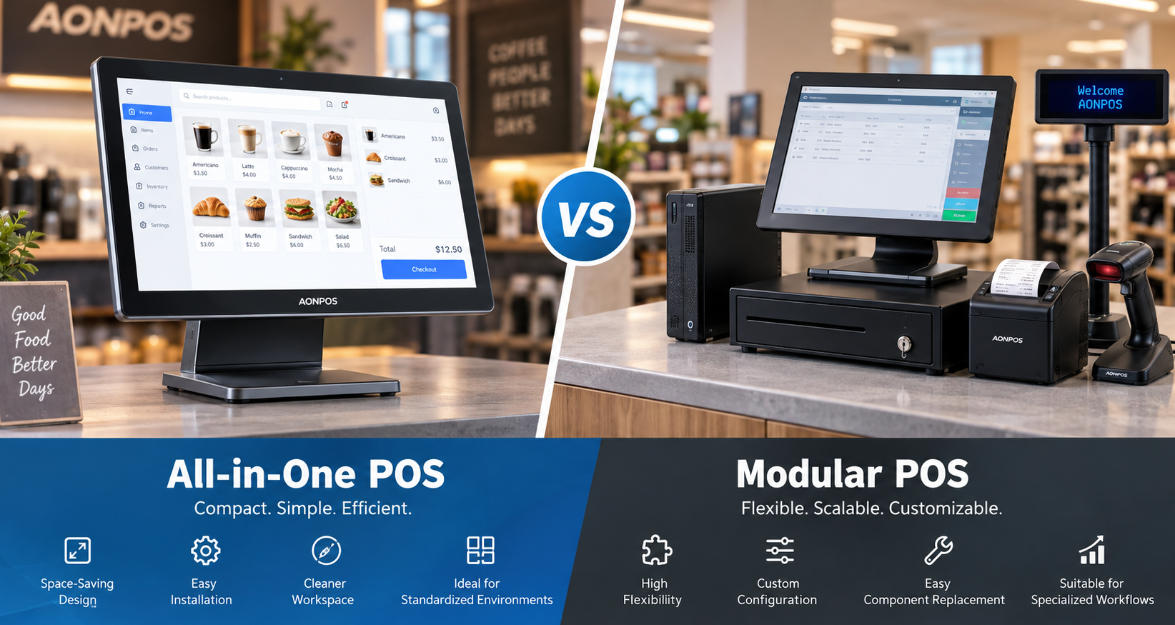
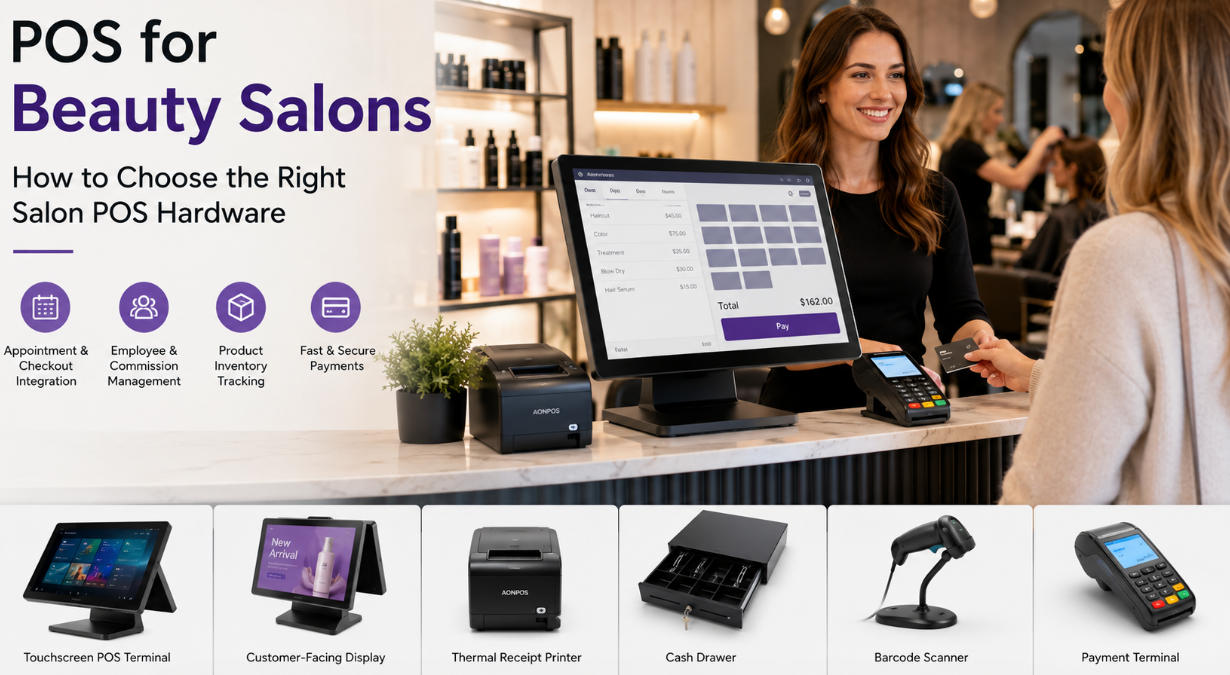
    A modern point-of-sale solution is no longer just a cash register. Today, businesses rely on a complete ecosystem of POS hardware to manage transactions, inventory, customer data, and payment security. Whether you run a restaurant, retail store, supermarket, or hospitality business, understanding the right POS terminal components is essential before investing in a new system. This guide explains the core POS devices included in a POS system, how each component works, and how businesses can choose the right hardware setup for long-term operational efficiency. Why POS Hardware Matters Software often gets most of the attention in POS discussions, but the physical hardware directly impacts speed, durability, and customer experience. High-quality POS hardware helps businesses: Reduce checkout time Improve order accuracy Support multiple payment methods Simplify staff training Lower maintenance costs Improve counter organization For industries with high transaction volume, reliable POS devices can directly affect revenue and customer satisfaction. 1. POS Terminal: The Core of Every POS System The POS terminal is the primary device used to run sales operations. It functions as the central control unit where staff process orders, manage products, check inventory, and complete transactions. Common POS terminal formats include: All-in-One POS Terminal An all-in-one unit integrates display, processor, and operating system into one compact device. Benefits: Space saving Cleaner counter layout Easier installation Lower cable complexity Many modern businesses prefer all-in-one systems because they combine multiple POS terminal components into one streamlined solution. Modular POS System A modular setup separates monitor, computer, and peripherals. Benefits: Flexible upgrades Custom hardware selection Easier replacement of individual parts Businesses with unique workflows often choose modular POS hardware for scalability. 2. Touchscreen Display A touchscreen is one of the most important POS devices in modern retail and restaurant environments. Benefits include: Faster order entry Shorter employee onboarding Fewer manual input errors More intuitive navigation Many businesses now use capacitive touchscreens for better durability and smoother user interaction. Dual-Screen POS Displays A dual-screen configuration includes: Operator display Customer-facing display Customer displays improve transparency by showing: Order details Payment totals Promotions Loyalty programs Brands like Aonpos offer dual-screen and all-in-one POS solutions designed for retail and restaurant operations, where customer interaction is part of the buying experience. 3. Receipt Printer Receipt printers remain standard POS terminal components for both restaurants and retail stores. Main printer types: Thermal Receipt Printer Most common option. Advantages: Fast printing Quiet operation Lower maintenance No ink required Impact Printer Still used in some kitchen environments. Advantages: Multi-copy printing Durable in heat-heavy conditions Receipt printers are essential POS hardware for: Transaction confirmation Returns and exchanges Kitchen ticket printing Audit trails 4. Cash Drawer Although digital payments continue to grow, many businesses still accept cash. A cash drawer is a secure storage unit connected to the POS system. Functions: Organizes bills and coins Opens automatically after cash transactions Supports shift balancing and reconciliation For hybrid payment businesses, cash drawers remain a necessary part of POS devices. 5. Barcode Scanner A barcode scanner is critical for businesses managing large inventories. Use cases: Product lookup Inventory management Checkout acceleration Pricing accuracy Scanner types: Handheld Scanner Best for: Retail stores Warehouses Inventory audits Fixed Scanner Best for: Grocery stores High-volume checkout lanes Barcode scanners are among the highest ROI POS hardware investments because they significantly reduce manual errors. 6. Card Reader and Payment Terminal A payment terminal allows businesses to accept: EMV chip cards Magnetic stripe cards NFC/contactless payments Mobile wallets Modern payment readers are essential POS terminal components for payment flexibility and security compliance. Important features: PCI compliance Encryption Contactless support Fast transaction approval Restaurants and retail businesses should prioritize payment hardware that supports future payment trends. 7. Customer Display Customer-facing displays are increasingly common POS devices. Benefits: Order verification Reduced disputes Upsell promotions Branding opportunities This hardware is especially valuable in restaurants and quick-service environments. 8. Additional POS Devices Depending on industry needs, businesses may also require extra POS hardware: Kitchen Display System (KDS) Used in restaurants to replace paper tickets. Label Printer Used for: Pricing labels Shipping labels Shelf tags Cash Counting Machine Useful for high-cash environments. Weighing Scale Common in grocery and food retail. Handheld POS Device Mobile checkout for: Table service Pop-up stores Inventory scanning These specialized POS devices help businesses customize workflows. How to Choose the Right POS Hardware When selecting POS hardware, businesses should evaluate: Business Type A restaurant needs different POS terminal components than a retail store. Counter Space Compact counters benefit from all-in-one terminals. Transaction Volume High-volume businesses need durable hardware. Expansion Plans Scalable systems reduce future replacement costs. Integration Compatibility Hardware should work seamlessly with POS software and payment providers. For businesses comparing solutions, reviewing a complete buyer guide can help narrow down the best hardware-software combination. Recommended Reading:Learn how to choose the best POS system for your business in this complete B2B guide:https://www.aonpostech.com/best-pos-system-for-restaurants-retail-in-2026-complete-b2b-buyer-guide Conclusion A complete POS system typically includes several essential POS hardware components: POS terminal Touchscreen display Receipt printer Cash drawer Barcode scanner Payment terminal Customer display Additional POS devices may include kitchen displays, label printers, handheld terminals, and scales depending on industry requirements. Understanding these POS terminal components helps businesses invest in systems that improve efficiency, enhance customer experience, and support long-term growth. As businesses increasingly move toward integrated solutions, manufacturers such as Aonpos continue developing all-in-one and dual-screen POS hardware designed for restaurants, retail stores, and supermarkets.
  • Maximizing Operational Efficiency: A Guide to MDM Remote Management for Self-Service Payment Kiosks
    Maximizing Operational Efficiency: A Guide to MDM Remote Management for Self-Service Payment Kiosks Feb 04, 2026
    As businesses transition to automated checkout environments, the question is no longer just about hardware durability—it’s about the "intelligence" behind the screen. One of the most common questions we receive is: "Does the self-service payment kiosk support MDM (Mobile Device Management) remote management?" At AonpoTech, we design our hardware—including the industry-leading APK06 and AP022 series—specifically to integrate with modern MDM ecosystems. This capability is the backbone of a successful, scalable self-service strategy. The Vital Role of MDM in Self-Service Kiosks Mobile Device Management (MDM) is a protocol that allows IT administrators to control, secure, and enforce policies on a fleet of devices from a centralized dashboard. For a self-service payment kiosk, MDM isn't just a "feature"—it is a necessity for reducing the Total Cost of Ownership (TCO). 1. Zero-Touch Deployment and Scaling Manual configuration is a thing of the past. With AonposTech’s Android-based kiosks (supporting Android 7.1 through Android 11+), you can utilize Zero-Touch Deployment. This means once the hardware is connected to the internet via RJ45 Ethernet or Wi-Fi, the MDM automatically pushes your proprietary POS software, network credentials, and security settings. 2. Advanced Kiosk Mode Lockdown Security is paramount in public spaces. Our kiosks support "Kiosk Mode" through MDM, which locks the interface to a single application. This prevents users from accessing the underlying OS, ensures the capacitive touch screen remains responsive only to your business app, and protects the system from unauthorized tampering. 3. Proactive Remote Monitoring and "Heartbeat" Checks Hardware downtime equals lost revenue. By linking your AonpoTech payment terminal to an MDM platform, you can monitor the "health" of your fleet in real-time. Remote Reboot: If a terminal freezes, you can trigger a remote restart without sending a technician to the site. Peripheral Status: Monitor if the integrated 80mm thermal printer is out of paper or if the QR code scanner is active. Technical Compatibility: AonpoTech Hardware Specifications Our kiosks are engineered for compatibility with leading MDM solutions like SOTI MobiControl, VMware AirWatch, and Microsoft Intune. Feature AonpoTech APK06 / AP022 Specifications MDM Capability Operating System Android 11.0 / Windows 10 IoT Remote OS Updates & Patching Processor RK3568 (Android) / Intel i3/i5 (Windows) High-performance remote tasking Connectivity RJ45 Ethernet, Wi-Fi, 4G LTE Constant "Always-On" Management Modular Design QR Scanner, NFC, Thermal Printer Peripheral monitoring via SDK/API Android vs. Windows: Which is Better for Remote Management? While AonpoTech provides industrial-grade hardware for both, Android kiosks (like our RK3568-powered models) are often the winners for remote management. Android Management: Offers a more "mobile-native" management feel, allowing for granular control over app sandboxing and remote wipes. Windows Management: Ideal for large-scale enterprises using Active Directory and Windows Defender, providing deep integration with corporate IT security tools. Why Choose AonpoTech for Your Kiosk Fleet? Beyond MDM support, AonpoTech (Aonpos) focuses on Modular Flexibility. Our "Lego-like" design allows you to swap components—such as NFC modules or cameras for facial recognition—without replacing the entire unit. Coupled with our Kiosk Hardware SDK & API, your development team can focus on building a world-class user experience while we ensure the hardware and management protocols remain rock-solid. Conclusion: Future-Proof Your Business Supporting MDM remote management is the difference between a kiosk that works and a kiosk that grows your business. By choosing AonpoTech's self-service solutions, you are investing in hardware that is secure, easy to maintain, and ready to scale.
  • Self-Service Payment Kiosk for Convenience Stores: Making Checkout Faster Without Making It Complicated
    Self-Service Payment Kiosk for Convenience Stores: Making Checkout Faster Without Making It Complicated Feb 01, 2026
    Running a convenience store or a small supermarket is all about speed. Customers don’t come in to browse for long—they want to grab what they need, pay quickly, and get on with their day. But during peak hours, even a short line can feel like a problem. That’s where a self-service payment kiosk starts to make real sense. At Aonpostech, we work closely with convenience stores and small retailers to design self-service payment kiosks that actually fit daily retail operations—not oversized systems built for big supermarkets, but practical solutions for single-store checkout environments. Why Self-Service Checkout Is Becoming Popular in Convenience Stores For many small stores, checkout is the biggest bottleneck. One cashier, a small counter, and a sudden rush of customers can quickly slow everything down. A self-service payment kiosk for convenience stores helps solve common, everyday issues such as: Long queues during busy hours Limited staff availability Rising labor costs Manual inventory updates Loyalty programs that slow down checkout Instead of replacing staff, self-service kiosks share the workload, allowing stores to handle more customers without increasing pressure behind the counter. Faster Checkout During Peak Hours Peak hours are predictable—morning commuters, lunchtime traffic, evening shoppers. The challenge is handling them smoothly without adding more staff for just a few busy hours. Aonpostech self-service payment kiosks are designed for fast, repeat transactions, helping stores: Reduce waiting time when it matters most Keep customer flow moving during rush periods Avoid overcrowding at the cashier counter Even in a single-store retail checkout setup, one well-placed kiosk can make a noticeable difference. Quick Scan and Pay for Everyday Purchases Convenience store products are simple, and payment should be just as simple. Our kiosks support: Fast barcode and QR code scanning Credit and debit card payments Mobile payment options, depending on market needs For customers buying snacks, drinks, or daily necessities, checkout takes seconds—not minutes. That speed is exactly what keeps people coming back. Inventory Management That Works in the Background Small stores don’t have time for complicated systems. Inventory management should happen quietly, without adding extra steps. When integrated with inventory software, Aonpostech kiosks can: Update stock levels automatically after each sale Reduce manual counting and errors Help store owners understand which products move fastest This kind of real-time inventory visibility is especially useful for small supermarkets with limited storage space. Simple Membership and Loyalty Point Integration Loyalty programs aren’t just for large chains anymore. Even neighborhood convenience stores benefit from encouraging repeat visits. Our self-service payment kiosks support membership and loyalty point systems, allowing customers to: Scan a QR code or enter a phone number Automatically earn points Redeem rewards without slowing down checkout The process stays quick, which is key in a high-traffic retail environment. Built for Small Retail Spaces Space is always limited in convenience stores. That’s why our kiosks are designed to be compact and flexible. Aonpostech offers: Floor-standing self-service kiosks Countertop payment kiosks for tighter layouts Each unit can be customized to match your store’s layout and branding, without disrupting existing operations. A Reliable Self-Service Payment Kiosk Manufacturer from China Aonpostech is a China-based self-service payment kiosk manufacturer with experience supporting both local and international retail projects. We offer: Bulk production for retail chains and distributors OEM and ODM customization services Hardware customization, including screen size and modules Flexible integration with different payment systems Whether you’re upgrading one store or rolling out multiple locations, we focus on stable hardware, practical design, and long-term usability. Who This Solution Is Designed For Our self-service payment kiosks are commonly used by: Convenience store chains Independent mini-markets Small supermarkets Retail solution providers Distributors looking for a long-term kiosk supplier If you’re searching for a self checkout kiosk for small retail or a custom self-service payment kiosk supplier, Aonpostech provides both flexibility and manufacturing scale. A Smarter Checkout Experience for Modern Convenience Stores Self-service checkout is no longer a “nice to have.” For convenience stores and small supermarkets, it’s becoming a practical way to improve efficiency without changing how the store operates. At Aonpostech, we focus on building self-service payment kiosks that work quietly in the background—helping stores serve customers faster, manage inventory better, and stay competitive. If you’d like to learn more about customization options or bulk supply, feel free to contact us.

تحتاج مساعدة؟ دردش معنا

ترك رسالة
لأي طلب معلومات أو دعم فني ، املأ النموذج. جميع الحقول التي تحمل علامة النجمة * مطلوبة.
يُقدِّم

بيت

منتجات

whatsApp

اتصال