The Rise of Smart Self-Service Payment Kiosks: Why Businesses Are Accelerating Automation in 2026
Mar 02, 2026
Across retail stores, quick-service restaurants, transportation hubs, and even hospitals, one trend is becoming impossible to ignore:
Customers are choosing machines over queues.
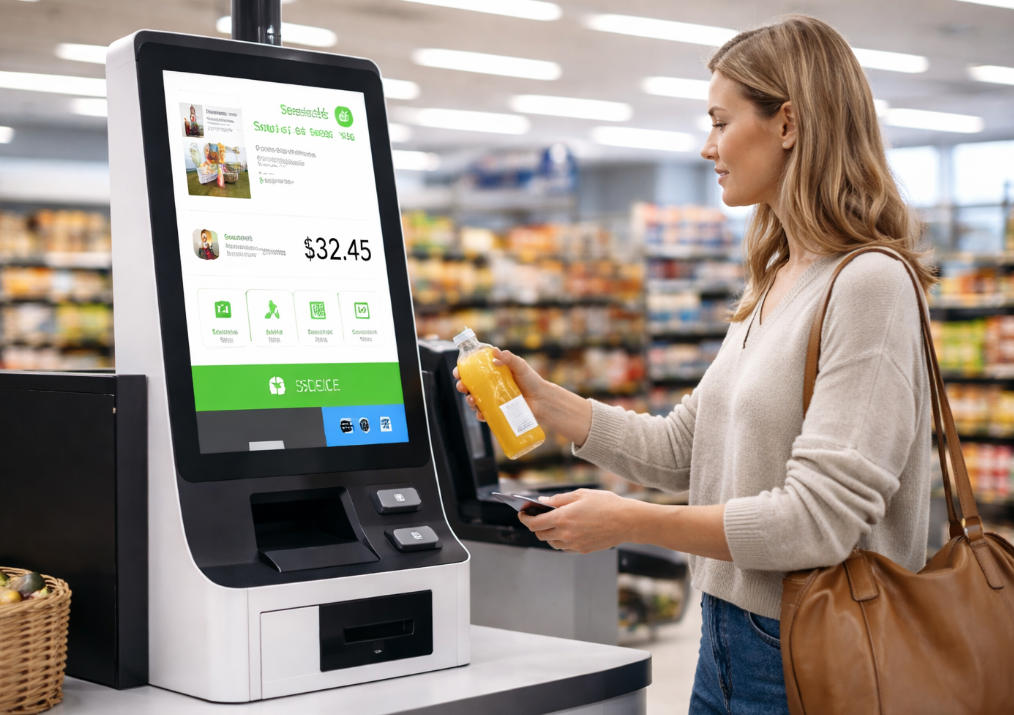
Smart Self-Service Payment Kiosks are no longer experimental technology. They are rapidly becoming the standard infrastructure for modern businesses seeking efficiency, scalability, and operational resilience.
But what’s really driving this shift?
Labor Pressure Is Reshaping Front-End Operations
Globally, businesses are facing:
Rising labor costs
Staff shortages
Higher training and turnover rates
Demand for extended service hours
For decision-makers, this creates a simple question:How can operations scale without scaling headcount?
This is where unattended payment systems and self-checkout kiosks enter the picture.
By automating repetitive transaction processes, companies are reallocating staff to higher-value roles — customer service, sales support, and in-store experience optimization.
Automation is no longer about replacing people.It’s about redesigning workflows.
Contactless Payment Is Now the Default Expectation
Consumer behavior has permanently shifted.
NFC, QR code payments, and mobile wallets are no longer optional features — they are baseline expectations. Businesses that cannot support multi-payment ecosystems risk losing transaction opportunities.
Modern contactless payment kiosks integrate:
EMV chip and magnetic stripe cards
NFC tap-to-pay
QR code payment systems
Digital wallets
POS backend integration
For enterprises planning long-term infrastructure, flexibility matters. A modular self-service payment kiosk ensures compatibility with evolving payment standards.
Data Is the Hidden Advantage
One of the most overlooked benefits of smart kiosk systems is data intelligence.
Every transaction generates behavioral insights:
Peak traffic times
Popular products
Payment preferences
Transaction speed metrics
When connected to ERP and POS systems, these insights help businesses optimize staffing, inventory, and marketing strategy.
For engineering and IT teams, API compatibility and system integration capability are just as important as hardware durability.
Industrial-Grade Reliability Is Non-Negotiable
Deploying kiosks in high-traffic environments requires more than a touchscreen and payment terminal.
Commercial deployments demand:
Industrial processors (ARM or Intel options)
Fanless architecture for stability
Anti-vandal enclosures
24/7 operation capability
Peripheral flexibility (barcode scanners, printers, cameras)
A poorly designed kiosk increases downtime.A well-engineered modular payment terminal becomes long-term infrastructure.
For procurement leaders evaluating OEM partners, manufacturing experience and customization capability directly impact total cost of ownership.
Retail Is Just the Beginning
While supermarkets and convenience stores are leading adoption, growth is expanding across:
Quick-service restaurants
Hospitality check-in systems
Transportation ticketing
Government service centers
Healthcare billing counters
What began as a retail self-checkout solution is evolving into a universal digital interaction point.
The Strategic Perspective: Automation as Competitive Advantage
Forward-thinking enterprises are not asking whether to deploy smart kiosks.
They are asking:
How quickly can we scale?
How customizable is the hardware?
Can we integrate seamlessly with our existing systems?
Is the supplier capable of OEM/ODM production?
The conversation has shifted from experimentation to infrastructure planning.
Smart Self-Service Payment Kiosks are becoming foundational technology in modern commerce.
Businesses that adapt early gain operational flexibility, stronger customer experience, and measurable efficiency gains.