Custom POS Hardware: What Can Be Customized?
Jun 06, 2026
Understanding the Possibilities of a Custom POS System
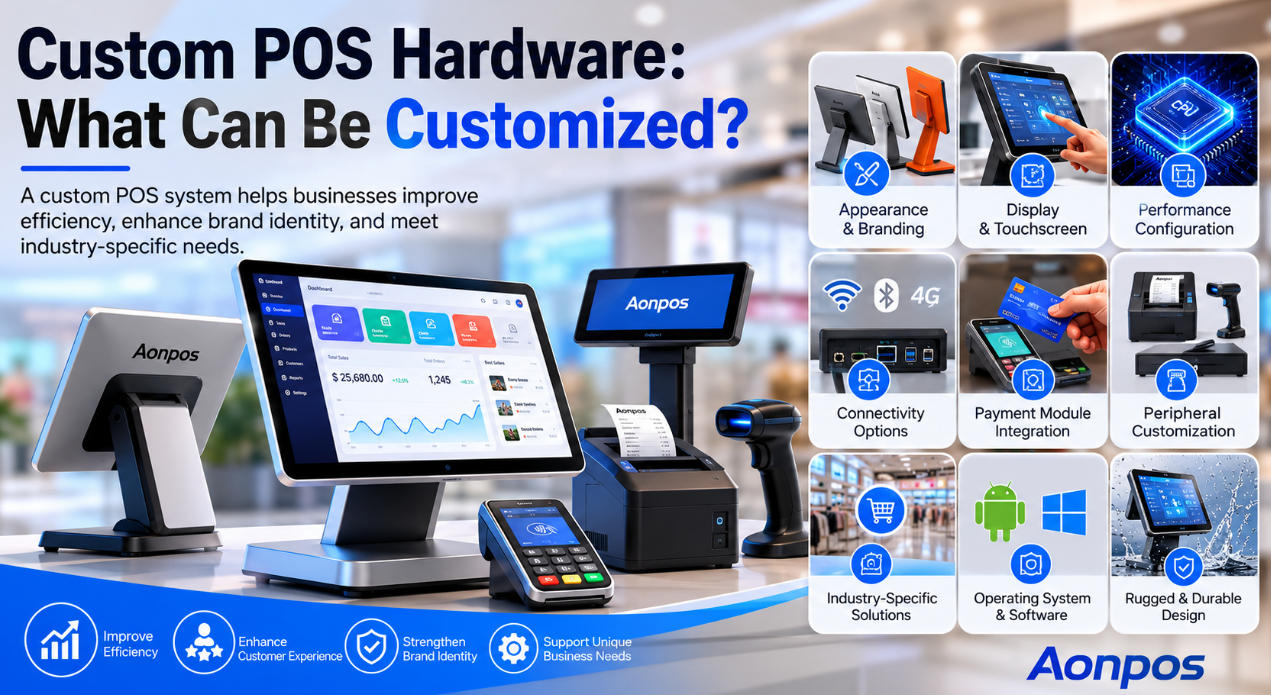
In today's competitive retail and hospitality landscape, businesses increasingly seek technology solutions tailored to their unique operational requirements. While software customization often receives the most attention, hardware customization is equally important. A well-designed custom POS system combines both software and hardware elements to create a seamless user experience, improve efficiency, and strengthen brand identity.
But what exactly can be customized in POS hardware? From device appearance to internal components and industry-specific features, modern POS manufacturers offer a wide range of customization options. This article explores the key aspects of custom POS hardware and how businesses can benefit from tailored point-of-sale solutions.
Why Businesses Choose a Custom POS System
Standard POS terminals may satisfy basic transaction needs, but they often fail to address specialized operational requirements. Businesses operating in retail, restaurants, healthcare, hospitality, logistics, and self-service environments frequently require hardware that aligns with their workflows.
A custom POS system can help businesses:
Improve operational efficiency
Enhance customer experience
Strengthen brand consistency
Support industry-specific applications
Reduce long-term maintenance costs
Differentiate from competitors
As technology evolves, customization has become more accessible, allowing businesses of various sizes to implement solutions that fit their exact needs.
1. Exterior Design and Branding Customization
One of the most visible aspects of POS hardware customization is the physical appearance of the device.
Custom Colors
Manufacturers can produce POS terminals in colors that match a company's brand identity. Instead of standard black or white models, businesses can choose custom color schemes that create a consistent customer-facing environment.
Logo Integration
Brand logos can be incorporated directly into:
POS terminal casings
Customer-facing displays
Packaging materials
Peripheral devices
This approach helps reinforce brand recognition across multiple touchpoints.
Industrial Design Adjustments
For large deployments, businesses may request modifications to:
Device shape
Display bezel design
Mounting options
Stand configurations
Cable management systems
These adjustments help create a more professional and cohesive appearance.
2. Display and Touchscreen Customization
The display is the primary interface between employees and the POS system. Customization options include both hardware specifications and user interaction features.
Screen Size Selection
Different industries require different screen configurations:
10-inch displays for compact retail counters
15.6-inch screens for standard POS stations
21-inch or larger displays for self-service kiosks
Touch Technology
Businesses can choose from various touch technologies, including:
Capacitive touchscreens
Resistive touchscreens
Multi-touch displays
Glove-compatible touch solutions
Brightness and Durability
For outdoor or high-light environments, displays can be customized with:
High-brightness panels
Anti-glare coatings
Waterproof protection
Scratch-resistant surfaces
These enhancements improve usability and extend device lifespan.
3. Processor and Performance Configuration
A custom POS system often requires specific performance levels depending on application complexity.
CPU Selection
Businesses can choose processors based on workload requirements:
Entry-level processors for basic transactions
Mid-range CPUs for retail management
High-performance processors for data-intensive applications
Memory and Storage
Customization options commonly include:
RAM upgrades
SSD capacity expansion
Industrial-grade storage
Enhanced data security features
These configurations ensure the system can handle future software updates and growing transaction volumes.
4. Connectivity and Interface Options
Different business environments require different connectivity solutions.
Custom Port Configuration
POS manufacturers can provide combinations of:
USB ports
Serial ports (RS232)
Ethernet ports
HDMI outputs
Cash drawer interfaces
Wireless Connectivity
Many businesses require integrated:
Wi-Fi
Bluetooth
4G/5G modules
NFC communication
These features support mobile payments and flexible deployment scenarios.
5. Payment Module Integration
Payment technology is one of the most critical components of a modern POS solution.
Card Reader Options
Businesses can customize support for:
EMV chip cards
Magnetic stripe cards
Contactless payments
Mobile wallets
Regional Compliance
Different markets have different payment standards and certifications. A customized hardware platform can be adapted to local compliance requirements, reducing deployment complexity.
6. Industry-Specific Hardware Features
One major advantage of a custom POS system is the ability to integrate industry-focused functionality.
Retail
Retail businesses may require:
Barcode scanners
RFID readers
Customer displays
Inventory management peripherals
Hospitality
Restaurants and cafes often benefit from:
Spill-resistant designs
Kitchen display connectivity
Fast-order entry interfaces
Compact countertop footprints
Healthcare
Healthcare environments may need:
Antimicrobial surfaces
Enhanced security modules
Medical-grade certifications
Easy-clean enclosures
Self-Service Applications
Kiosks and self-service terminals can incorporate:
Receipt printers
QR code scanners
ID verification modules
Biometric authentication devices
7. Peripheral Customization
POS hardware extends beyond the main terminal.
Common customizable peripherals include:
Receipt printers
Cash drawers
Barcode scanners
Customer displays
Fingerprint readers
Weighing scales
Ensuring compatibility between all components creates a more reliable ecosystem and simplifies maintenance.
8. Operating System and Firmware Customization
Hardware customization often works hand-in-hand with software optimization.
Manufacturers can provide support for:
Windows-based POS systems
Android POS terminals
Linux platforms
Custom firmware development
This flexibility allows businesses to deploy software environments that align with their operational goals.
9. Ruggedization and Environmental Protection
Certain industries require POS devices capable of operating in demanding environments.
Available enhancements may include:
IP-rated water resistance
Dust protection
Shock resistance
Fanless thermal design
Extended temperature tolerance
These features are especially valuable in warehouses, outdoor retail locations, transportation hubs, and industrial facilities.
Choosing the Right Custom POS Hardware Partner
Successful customization requires collaboration with an experienced manufacturer that understands both hardware engineering and commercial deployment requirements.
When evaluating a supplier, consider:
Customization capabilities
Manufacturing experience
Certification support
Production scalability
Technical support services
Long-term product availability
Companies such as Aonpos, which focus on POS hardware development and manufacturing, often provide flexible customization options that allow businesses to adapt hardware configurations to specific market requirements while maintaining reliability and performance standards.
Future Trends in Custom POS Systems
The demand for customized POS hardware continues to grow as businesses seek greater operational flexibility. Emerging trends include:
AI-enabled POS terminals
Cloud-connected hardware ecosystems
Modular device architectures
Enhanced biometric security
IoT integration
Sustainable hardware materials
As these technologies mature, the ability to customize both hardware and software will become an increasingly important competitive advantage.
Conclusion
A modern custom POS system goes far beyond simple transaction processing. Businesses can customize virtually every aspect of POS hardware, including design, display specifications, performance components, connectivity, payment modules, and industry-specific features.
By investing in tailored POS hardware, organizations can improve efficiency, support unique workflows, enhance brand consistency, and prepare for future growth. Whether operating in retail, hospitality, healthcare, or self-service environments, customized POS solutions provide the flexibility needed to meet evolving customer and operational demands.