Custom POS Hardware: What Can Be Customized?
Jun 06, 2026In today's competitive retail and hospitality landscape, businesses increasingly seek technology solutions tailored to their unique operational requirements. While software customization often receives the most attention, hardware customization is equally important. A well-designed custom POS system combines both software and hardware elements to create a seamless user experience, improve efficiency, and strengthen brand identity.
But what exactly can be customized in POS hardware? From device appearance to internal components and industry-specific features, modern POS manufacturers offer a wide range of customization options. This article explores the key aspects of custom POS hardware and how businesses can benefit from tailored point-of-sale solutions.
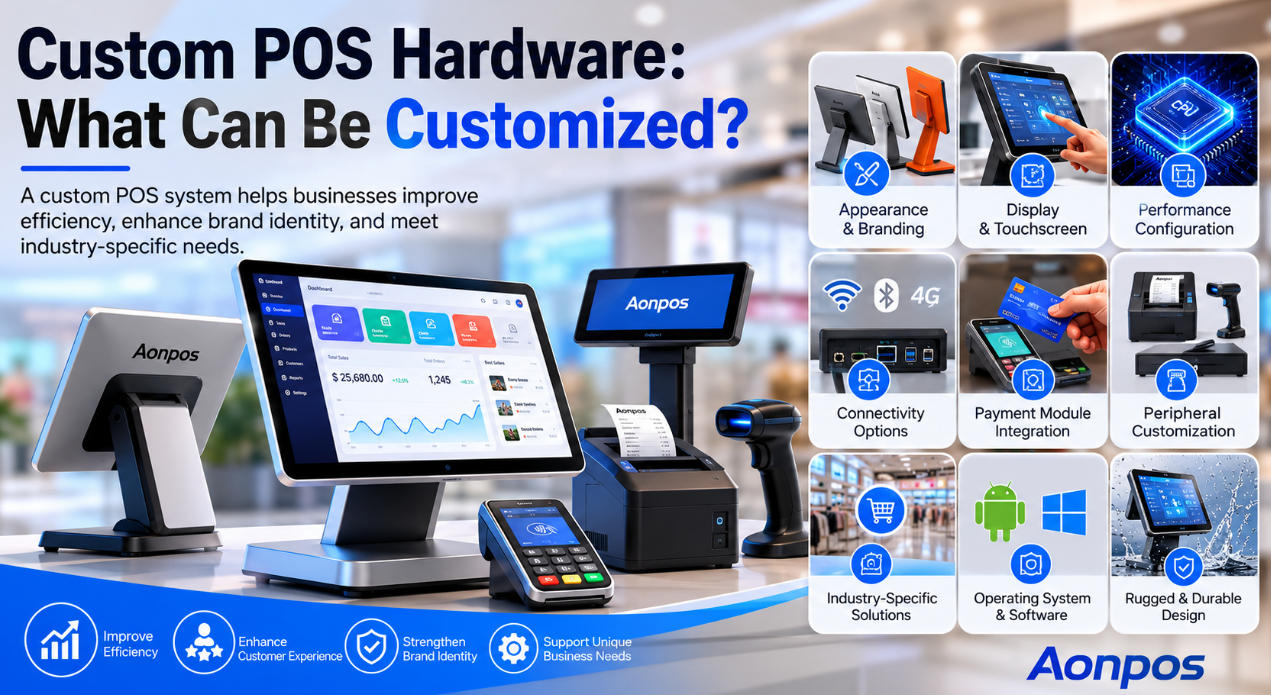
Standard POS terminals may satisfy basic transaction needs, but they often fail to address specialized operational requirements. Businesses operating in retail, restaurants, healthcare, hospitality, logistics, and self-service environments frequently require hardware that aligns with their workflows.
A custom POS system can help businesses:
As technology evolves, customization has become more accessible, allowing businesses of various sizes to implement solutions that fit their exact needs.
One of the most visible aspects of POS hardware customization is the physical appearance of the device.
Manufacturers can produce POS terminals in colors that match a company's brand identity. Instead of standard black or white models, businesses can choose custom color schemes that create a consistent customer-facing environment.
Brand logos can be incorporated directly into:
This approach helps reinforce brand recognition across multiple touchpoints.
For large deployments, businesses may request modifications to:
These adjustments help create a more professional and cohesive appearance.
The display is the primary interface between employees and the POS system. Customization options include both hardware specifications and user interaction features.
Different industries require different screen configurations:
Businesses can choose from various touch technologies, including:
For outdoor or high-light environments, displays can be customized with:
These enhancements improve usability and extend device lifespan.
A custom POS system often requires specific performance levels depending on application complexity.
Businesses can choose processors based on workload requirements:
Customization options commonly include:
These configurations ensure the system can handle future software updates and growing transaction volumes.
Different business environments require different connectivity solutions.
POS manufacturers can provide combinations of:
Many businesses require integrated:
These features support mobile payments and flexible deployment scenarios.
Payment technology is one of the most critical components of a modern POS solution.
Businesses can customize support for:
Different markets have different payment standards and certifications. A customized hardware platform can be adapted to local compliance requirements, reducing deployment complexity.
One major advantage of a custom POS system is the ability to integrate industry-focused functionality.
Retail businesses may require:
Restaurants and cafes often benefit from:
Healthcare environments may need:
Kiosks and self-service terminals can incorporate:
POS hardware extends beyond the main terminal.
Common customizable peripherals include:
Ensuring compatibility between all components creates a more reliable ecosystem and simplifies maintenance.
Hardware customization often works hand-in-hand with software optimization.
Manufacturers can provide support for:
This flexibility allows businesses to deploy software environments that align with their operational goals.
Certain industries require POS devices capable of operating in demanding environments.
Available enhancements may include:
These features are especially valuable in warehouses, outdoor retail locations, transportation hubs, and industrial facilities.
Successful customization requires collaboration with an experienced manufacturer that understands both hardware engineering and commercial deployment requirements.
When evaluating a supplier, consider:
Companies such as Aonpos, which focus on POS hardware development and manufacturing, often provide flexible customization options that allow businesses to adapt hardware configurations to specific market requirements while maintaining reliability and performance standards.
The demand for customized POS hardware continues to grow as businesses seek greater operational flexibility. Emerging trends include:
As these technologies mature, the ability to customize both hardware and software will become an increasingly important competitive advantage.
A modern custom POS system goes far beyond simple transaction processing. Businesses can customize virtually every aspect of POS hardware, including design, display specifications, performance components, connectivity, payment modules, and industry-specific features.
By investing in tailored POS hardware, organizations can improve efficiency, support unique workflows, enhance brand consistency, and prepare for future growth. Whether operating in retail, hospitality, healthcare, or self-service environments, customized POS solutions provide the flexibility needed to meet evolving customer and operational demands.
Tel / Whatsapp : +86 -15999943922
بريد إلكتروني : nikki@aonpostech.com


© 2026 شنتشن Aonpos التكنولوجيا المحدودة .كل الحقوق محفوظة