What Is the Best POS System for Restaurants? A Comprehensive Guide
May 18, 2026
In the modern restaurant industry, efficiency and customer satisfaction are more critical than ever. A reliable restaurant POS system isn’t just a cash register—it’s the nerve center of operations, helping restaurant owners streamline workflows, manage inventory, track sales, and enhance customer experiences. Choosing the best POS for restaurant operations can be challenging given the variety of systems on the market. This guide provides a thorough comparison of top POS systems, their key features, and what to look for when making your decision.
Why Every Restaurant Needs a POS System
Running a restaurant involves juggling multiple moving parts: table management, order processing, staff coordination, inventory tracking, and customer engagement. Without a robust restaurant POS system, these processes can become chaotic, leading to mistakes, inefficiencies, and unhappy customers.
Modern POS systems go beyond simple transaction processing. They allow restaurant owners to:
Automate order management: Send orders directly to the kitchen, reducing human errors.
Track inventory: Monitor stock levels in real-time, minimize waste, and optimize supply orders.
Analyze sales data: Identify top-selling menu items, track peak hours, and generate detailed reports.
Enhance customer experience: Integrate loyalty programs, handle online orders, and manage reservations.
Investing in the right system not only improves operational efficiency but also contributes directly to revenue growth.
Key Features to Look for in the Best POS for Restaurant
When evaluating potential systems, certain features are essential for maximizing the value of a restaurant POS system:
Ease of UseHigh staff turnover is common in the restaurant industry. A POS system with an intuitive interface ensures new staff can get up to speed quickly, reducing training time and mistakes.
Order Management CapabilitiesYour POS should allow servers to take orders efficiently and send them directly to the kitchen or bar. Features like customizable modifiers, split checks, and table mapping are critical for smooth service.
Inventory TrackingAdvanced POS systems track ingredients and supplies in real-time. Some even alert managers when stock is low or when a menu item is selling faster than expected.
Analytics and ReportingThe best POS for restaurant use provides actionable insights through sales reports, labor analysis, and performance tracking. This helps owners make informed decisions about staffing, menu pricing, and promotions.
Integration with Third-Party ToolsModern restaurants often rely on multiple platforms for payments, online ordering, accounting, and marketing. A POS system that integrates seamlessly with these tools minimizes manual work and errors.
ScalabilityWhether you run a small café or a multi-location chain, your POS should scale with your business. Look for systems that can handle growth without requiring a complete replacement.
Reliable Customer SupportDowntime can be costly in a restaurant setting. Choose a provider with responsive support to ensure any issues are resolved quickly.
Top Restaurant POS Systems in 2026
Here’s a detailed look at some of the leading restaurant POS systems, highlighting their strengths and unique features.
1. Aonpos
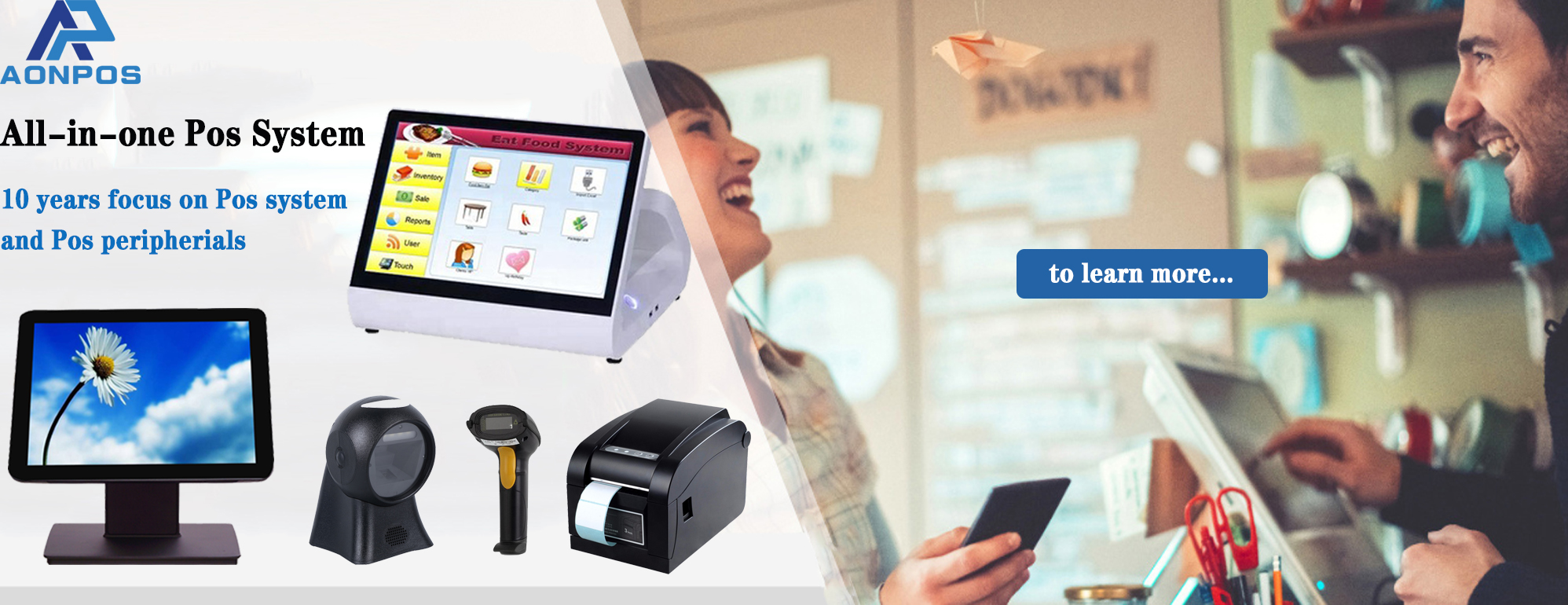
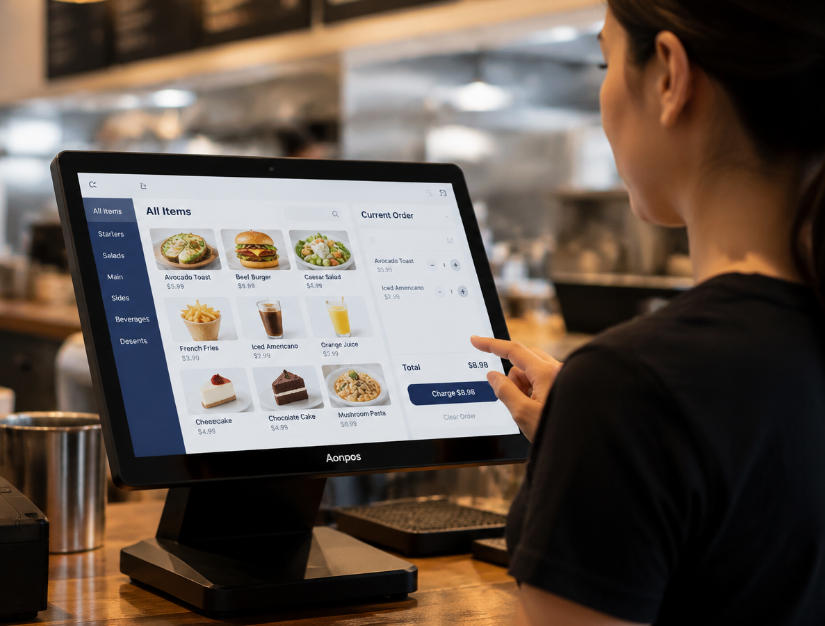
Overview: Aonpos is a flexible and feature-rich POS solution designed specifically for restaurants of all sizes. Its user-friendly interface and powerful tools make it a strong contender for the best POS for restaurant operations.
Key Features:
Real-time inventory tracking and management
Detailed sales and performance analytics
Integrated online ordering and payment processing
Support for loyalty programs and promotions
Scalable for single or multi-location restaurants
Why It Stands Out: Aonpos combines operational efficiency with adaptability, making it suitable for both small cafes and larger establishments. Its emphasis on inventory control and analytics helps restaurant owners make informed decisions that improve profitability.
2. Toast POS
Overview: Toast is one of the most widely used POS systems in the restaurant industry, known for its robust cloud-based platform and extensive feature set.
Key Features:
Touchscreen interface optimized for speed
Online ordering and delivery integration
Comprehensive reporting and analytics
Loyalty and gift card management
Employee scheduling and labor management
Pros:
Strong ecosystem for restaurants of all sizes
Regular software updates
Cloud-based, allowing remote management
Cons:
Can be expensive for smaller operations
Hardware is proprietary, limiting flexibility
3. Square for Restaurants
Overview: Square is renowned for its simplicity and affordability, making it a popular choice for small to medium-sized restaurants.
Key Features:
Easy setup and intuitive interface
Integrated payment processing
Menu management and customizable modifiers
Analytics and reporting tools
Online ordering and delivery integrations
Pros:
Affordable, with transparent pricing
Works on existing tablets, reducing hardware costs
Excellent for startups and small cafes
Cons:
Limited advanced features for large operations
Some users report slower customer support
4. Lightspeed Restaurant
Overview: Lightspeed offers a robust cloud-based POS system with strong reporting capabilities, ideal for restaurants and bars that need detailed operational insights.
Key Features:
Advanced inventory management
Employee management and scheduling
Customizable reporting dashboards
Integration with third-party apps for accounting, delivery, and reservations
Multi-location management
Pros:
Scalable and flexible
Strong analytics and inventory control
Cons:
Higher learning curve for staff
Premium pricing for advanced features
5. Upserve POS
Overview: Upserve, previously known as Breadcrumb POS, is tailored for full-service restaurants with a focus on analytics and guest experience.
Key Features:
Menu intelligence to identify top-performing dishes
Integrated loyalty programs
Table-side ordering and payments
Employee performance tracking
Pros:
Strong focus on guest analytics
Supports both small and large restaurants
Cons:
Subscription can be expensive
Hardware options are limited compared to other providers
Comparing POS Systems: What Matters Most
When selecting the best POS for restaurant, consider the following comparison points:
Feature
Aonpos
Toast
Square
Lightspeed
Upserve
Ease of Use
⭐⭐⭐⭐
⭐⭐⭐
⭐⭐⭐⭐
⭐⭐⭐
⭐⭐⭐
Inventory Management
⭐⭐⭐⭐
⭐⭐⭐
⭐⭐
⭐⭐⭐⭐
⭐⭐⭐
Analytics & Reporting
⭐⭐⭐⭐
⭐⭐⭐⭐
⭐⭐
⭐⭐⭐⭐
⭐⭐⭐⭐
Scalability
⭐⭐⭐⭐
⭐⭐⭐⭐
⭐⭐
⭐⭐⭐⭐
⭐⭐⭐
Online Ordering Integration
⭐⭐⭐⭐
⭐⭐⭐⭐
⭐⭐⭐
⭐⭐⭐
⭐⭐⭐
Customer Support
⭐⭐⭐⭐
⭐⭐⭐
⭐⭐⭐
⭐⭐⭐
⭐⭐⭐
From this comparison, it’s clear that Aonpos and Lightspeed provide strong overall functionality, particularly in inventory management and analytics. Square is ideal for small restaurants or cafes seeking simplicity, while Toast excels in large operations with complex workflows.
How to Choose the Right POS for Your Restaurant
Selecting the right POS system is not just about features—it’s about how well the system aligns with your restaurant’s specific needs. Here’s a step-by-step approach:
Assess Your Restaurant’s Size and TypeFull-service restaurants, quick-service establishments, and cafes have different needs. Consider order volume, menu complexity, and service style.
Identify Essential FeaturesList the features critical to your operation: online ordering, table mapping, inventory tracking, employee management, and reporting.
Consider Integration NeedsCheck whether the POS integrates with your accounting software, online ordering platforms, and loyalty programs.
Test the SystemMost providers offer demos or free trials. Use them to evaluate usability, speed, and reliability.
Calculate Total Cost of OwnershipConsider subscription fees, hardware costs, installation fees, and maintenance charges. Don’t choose based on upfront cost alone.
Review Support and ReliabilityEnsure the vendor offers responsive support and minimal downtime, as system failures can directly impact revenue and customer satisfaction.
Conclusion
Finding the best POS for restaurant operations is a strategic decision that affects every aspect of your business—from inventory management to customer satisfaction. Modern restaurant POS systems like Aonpos, Toast, Square, Lightspeed, and Upserve offer a variety of tools to streamline operations, reduce errors, and provide valuable insights.
Among them, Aonpos stands out for its combination of user-friendly design, robust inventory management, and scalable features suitable for restaurants of all sizes. Investing time in evaluating your needs, testing options, and choosing the right system can result in smoother operations, happier staff, and improved customer experiences.
Ultimately, the right POS system isn’t just a tool—it’s a partner in growing a successful restaurant.